Candid Talks, Writing

Why Participate in Writing Contests?

You many have noticed that there are a lot of writing contests. You can find lists of upcoming ones in places like Dreamers Magazine or the Funds for Writers website. Some magazines, like Blank Spaces, run a regular quarterly write prompt contest. Many literary journals will simply run a contest for the purpose of fundraising and/or as a method to boost publicity for the volunteer judge(s). There are even third-parties, such as Writing Battle, that specialize in supporting emerging and established writers with very specific prompt-driven, time-limited tournaments.

Each one of these contests is unique in how it handles theme, prompts, judging, awarding “prizes,” and so forth. Entering your work in a writing contest can be beneficial. Depending on the individual contest, you can make great strides by getting involved. Here’s what I mean:

Continue reading “Why Participate in Writing Contests?”
Candid Talks, Nonfiction, Writing

Purrfect Prose

When I began submitting entries for writing contests and felt the sting of rejection, I realised that I needed help with the proofing process of writing. This was an imperative part of the writing-for-publication journey. What it meant was that I had to get more practice—not of writing, but of getting used to someone other than me reading my precious brainchildren. Reading my own work does not necessarily catch incoherencies.

Photo by Monica Silvestre on Pexels.com

As tough as it may be to receive criticism of my work, I learned that it was the surest way toward improvement. After all, writing for publication means that I’m not just doing this for myself. The goal is to reach others. So, my work should be the best and most presentable version—not just what I deem to be good enough.

I’ve decided to share here a tale of the first time I asked for a volunteer proofer to read my composition. It went like this:

Continue reading “Purrfect Prose”
Candid Talks, Nonfiction, Writing

Writers: Don’t Make this Mistake! Avoiding copyright issues through original wording

I remember when my family purchased our first home computer. I spent my evenings getting on the web through dial-up. Back then I would wait for what seemed like eons for websites to load. I was logging-on to chat networks long before instant messaging was a thing. If a family member needed the telephone, it meant logging-off and using the computer without internet—an impossible proposition these days. An offline PC meant playing 3D Pinball while listening to music on my radio.

Photo by Christina Morillo on Pexels.com

The main reason my parents purchased the computer was to enrich my ability to complete homework and so I could learn about the looming technical age first hand. They knew jobs in the future would involve a computer. Pre-Y2K, this preparation meant learning how to touch-type on the keyboard. We didn’t have a fancy typing program. I simply looked for opportunities to practice. Like when you’re learning a language, it’s a good idea to seek out social situations to engage in speaking it.

Once my fingers got used to the keyboard layout, the next challenge was speed. How did I train this? While listening to tunes, I typed out the song lyrics as I heard them. It was fun! The result? I was one of few students in my secondary school who could type over 70 words per minute. My teachers used to say that it was possible to earn a few bucks on the side by typing essays and such. Great prospect—never happened.

Thanks to my parents’ foresight, in the 25 years since then I’ve placed my touch-typing skills toward a range of personal, academic, and professional endeavours. It’s a skill I use daily. Have I continued typing song lyrics? Well, no. Let’s hold on to that thought for a minute.

Continue reading “Writers: Don’t Make this Mistake! Avoiding copyright issues through original wording”
Interviews

Interview with Alyssa Bushell

In this post, we’ll be hearing from Alyssa Bushell, mystery novel author, blogger, and baker. Alyssa is a Canadian writer located at Lake Huron in Southern Ontario. In this interview, Alyssa shares an overview of her story writing process, publication history, and some advice for fellow aspiring writers.

Your fiction has been published in journals such as Reckon Review and LEON Literary Review. How long did it take before you started receiving acceptance letters for your work? And has publication changed how you view your own writing?

Continue reading “Interview with Alyssa Bushell”
Candid Talks, Nonfiction, Writing

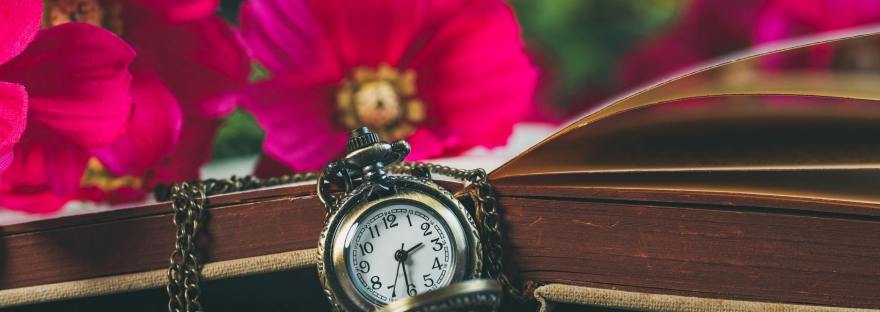
On Time

The speech I delivered in eighth grade was all about time. It even included a line from the Alan Parsons song “Time.” I had gotten the idea from helping my teacher referee basketball games. It was my job to hold the stopwatch and call out, “Time!” at the end of each period. It was less pressure than being the score keeper, that’s for sure!

Photo by Digital Buggu on Pexels.com

That memory surfaced while brainstorming ideas for marking time in narrative. The objective is to move away from exact data measurements and dive deeper to reach the reader on an emotional level. This can apply to fiction, but can also be creatively incorporated into memoir. Sometimes using a numerical measurement just does not do enough to convey meaning. I mean, is it a story or a textbook? Yikes!

For example, “He started high school in 1997,” would be an accurate statement but falls flat. If the narrator marks the time with a scene, this same information could be told like:

Continue reading “On Time”
Interviews

Interview with Alanna Rusnak

In this post, we’ll be hearing from Alanna Rusnak, Author of The Church in the Wildwood, Owner & Operator of Chicken House Press, and Founder & Managing Editor of Blank Spaces Magazine. Curious in knowing the origins of the beautiful Blank Spaces Magazine? Want some insight into what it takes to branch out on your own in the publishing industry? In this interview, Alanna tells us all about these things plus talks about her current work-in-progress and more!

So, you wear a lot of hats, Alanna. Tell us a bit about your average day or work week.

Continue reading “Interview with Alanna Rusnak”