We’re checking in with writer Chris Sadhill. In this post, he sums up what he’s been up to, outlines the evolution of his writing journey, and shares frustrations with which many creatives can relate.
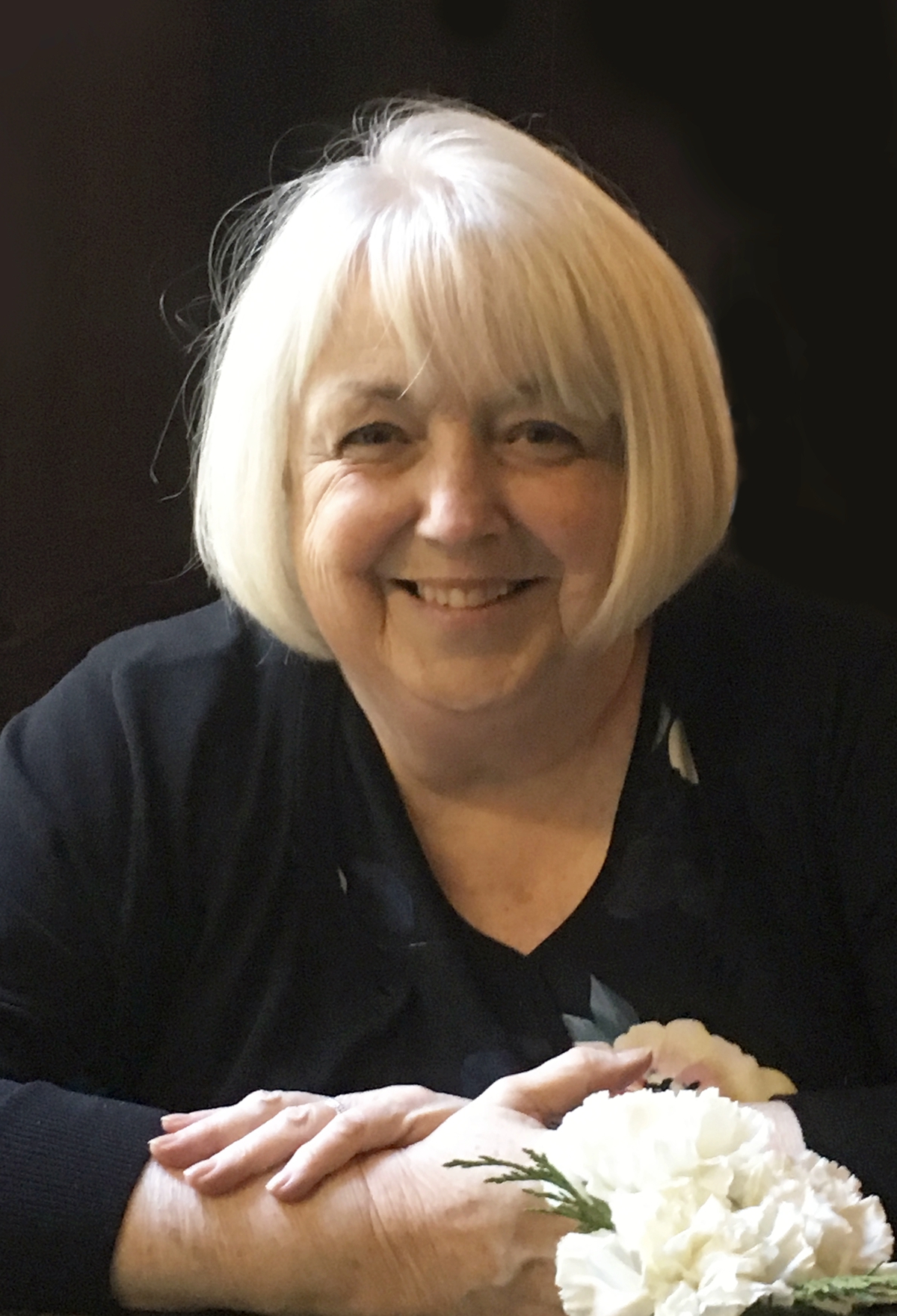
Take a look at his author bio:
Chris Sadhill is an evocative writer and poet whose work dissects the human experience from the fringe. His writing is recognized for its meaningfully layered hybrid of in-your-face and nuanced beauty, often exploring life’s darker realities. His stories have been described as powerful, reflective, and artfully woven, featuring deeply flawed and fractured characters burdened by struggle.
Sadhill has been published in Querencia Press, SFS Publishing, and most recently Seton Hill University’s Eye Contact Magazine. He is a multi-award-winning poet and short story writer, with numerous recognitions across national and international competitions, including Elegant Literature.
He resides near State College, Pennsylvania, with his wife, two cats, and their Mini-goldendoodle, Winston.
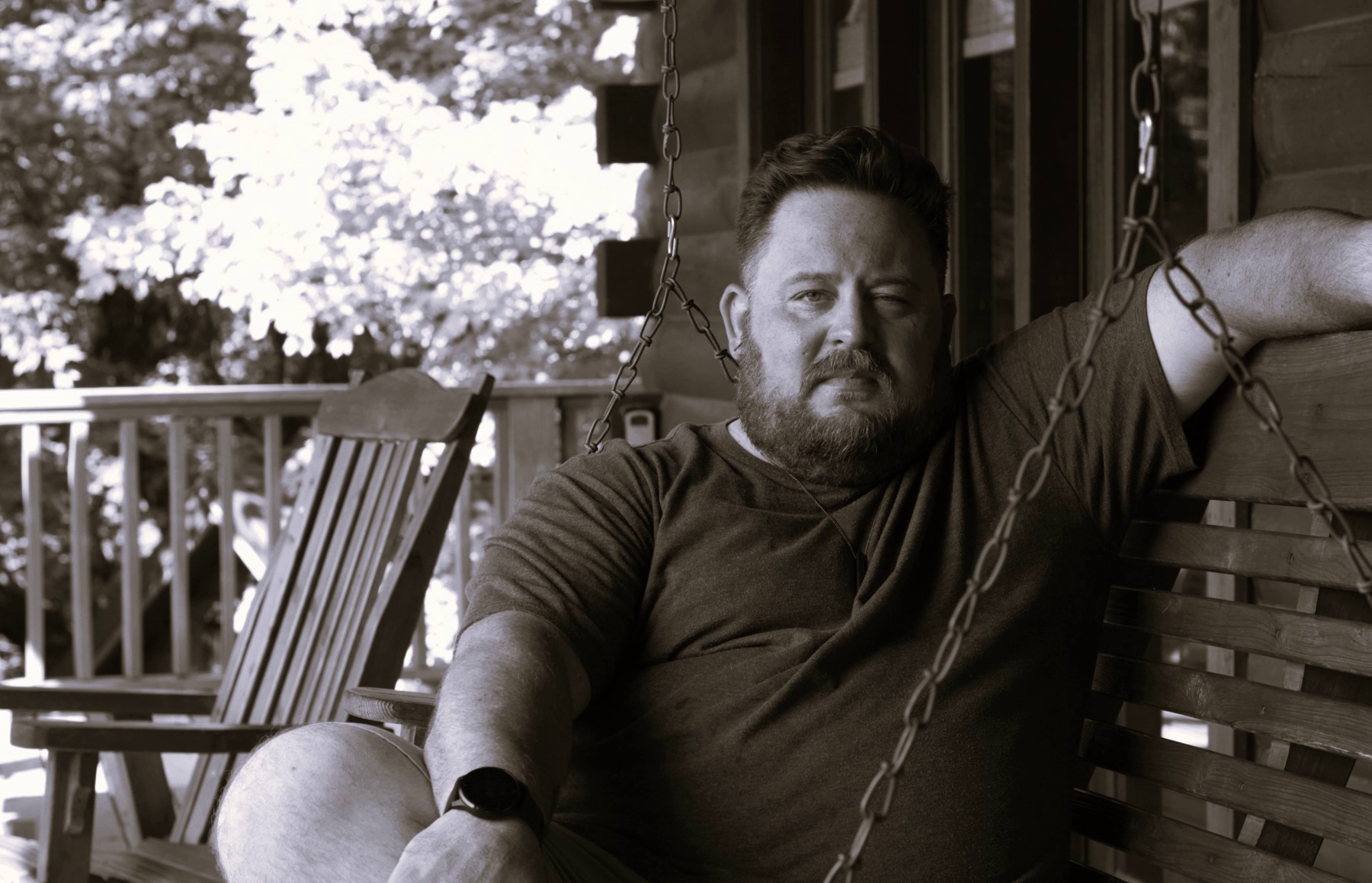
Photographer: Chris Sadhill’s wife, Brandee
Chris! It’s been two years since our last interview. What did 2025 look like for you in terms of writing projects & new developments? What’s on the horizon for 2026-27?
Now, this is a loaded question—one I’ll try to peel apart like an onion, but only briefly.
Briefly because I’d rather not rehash what was already incinerated and left behind me to smolder. And much like an onion, 2025 leaves a certain pungency that lingers long after the peeling and chopping—and, for a select unnamed few, a raging river of tears.
Hearing that it’s been two years since our last interview invokes a mild but temporary depression. My inner voice immediately starts screaming: You fucking loser, get on it. Why haven’t you written that novel yet? Two goddamn years? What the hell are you waiting for? Are you even a writer?
Clearly, my inner voice isn’t very friendly.
It’s funny how, in retrospect, we only understand certain truths once enough time has passed. Reality has a way of revealing itself long after the moment has ended.
In this post, we’ll be hearing from writer, editor, and publisher Alanna Rusnak. She updates us on her writing and publishing projects, while also offering us a glimpse into her inspirations as well as challenges. If you missed our original interview, take a look here: Interview with Alanna Rusnak
Check out Alanna’s author bio:
Alanna was born in the wrong decade and dreams of abandoning everything to live in a van and travel across Canada. She’ll call it “a book tour,” but it’s really an excuse to unleash her inner hippie.
A collector of typewriters and John Travolta VHS movies, she believes life is too short to not indulge in the things that bring you joy and in keeping with that philosophy, she left a stuffy office job of 18 years to launch a full-time indie press out of a chicken coop on her childhood property.
An author of literary and speculative fiction, Alanna likes to play in dark spaces, but always leaves room for redemption. Her latest novel is about burning down the world in order to set things right.
Settled in West Grey as a four-year-old, it has always been her home and source of inspiration and she’s working hard to build bridges between the various arts communities. With no immediate plans to abandon this, she will certainly leave it all behind the moment her husband gets on board with the van-life idea.
Alanna it’s been two years since our last interview. What did 2025 look like for you in your multiple roles as a writer, editor, and publisher? What’s on the horizon for 2026?
It’s actually hard to look back and articulate everything that happened in 2025 because the publishing world requires eyes forward at all times. As a solopreneur, I am keeping many balls in the air and though I’m always tired. I’m also always invigorated by the exciting projects that are constantly on the go.
I made a big decision in 2024 to keep my submissions closed in order to nurture my existing roster, roll out the titles already in my queue, and focus on follow up titles from writers already in my catalogue. This has been a game-changer in terms of workload and time management. I was working on an unsustainable (but totally exciting) publishing calendar that demanded a title was released every month. From a financial standpoint, this makes sense; from a human perspective, something had to give. The de-escalation has given me space to more fully invest in myself as a writer, and I learned that I have to treat myself like a client in order to find a good balance.
Now that we’re in 2026, I’m just beginning to see the effects of that 2024 decision. And as things are feeling more manageable, I’m able to push out titles with more care and discernment.
Who are your mentors or role models in the business? Tell us about one person who has inspired or supported you in your journey as a publisher.
I love following other scrappy little indie outfits who, like me, have a heart for writers and a desire to see them succeed. I’ve built a nice relationship with the owner of Byzantium Sky Press out of Delaware and we are often trading tips and tricks back and forth, commiserating over AI, and celebrating one another’s accomplishments through emails, Instagram DMs, and Zoom chats. It’s refreshing to find people who don’t look at you as competition, but as comrades in the same battle for creativity.
Chicken House Press is a flurry of activity! Alanna, tell us about your authors’ forthcoming appearances and readings. How can interested readers support their work?
In this highly energized post, we’ll be learning a lot from writer, editor, and publicist Dani Arieli. She tells us about her passion for poetic language, describes her current work in progress, and offers heartfelt advice for new writers.
Check out her author bio:
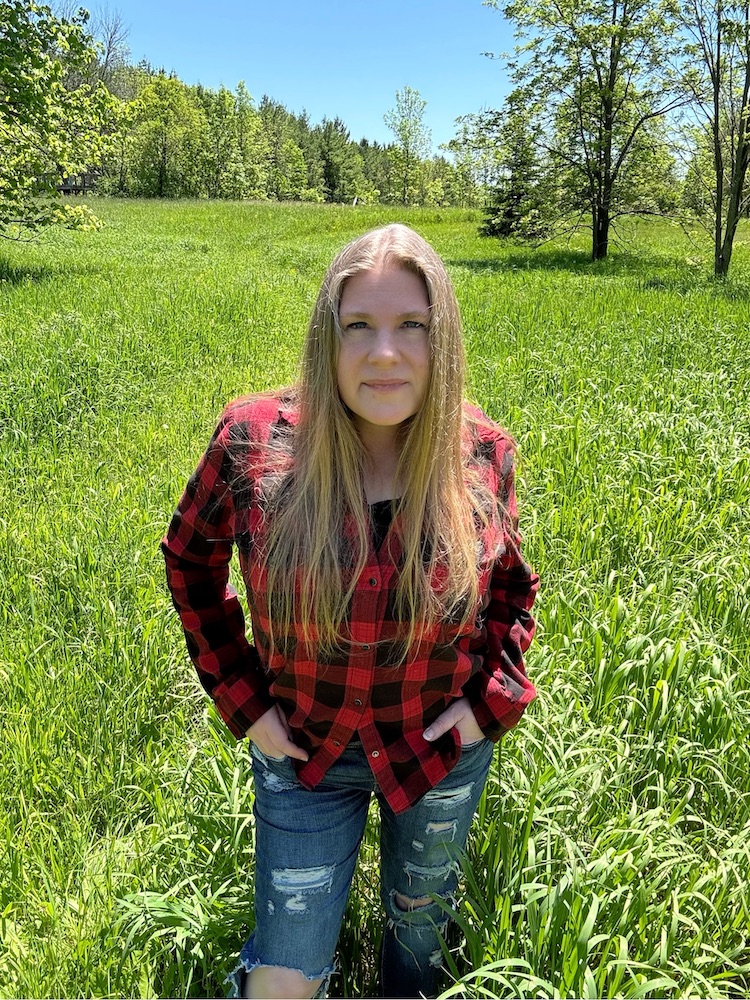
Photo Credit: Nieram Arieli
Dani Arieli is a poet and author, Pushcart Prize nominee, and lover of weird, dark, and archaic literature. She has creative works featured in 7th-Circle Pyrite, Beyond Words, Lothlorien Poetry Journal, and more. She is the marketing and publicity specialist for At Bay Press, and is currently working toward her Honours Bachelor of Creative Writing and Publishing degree at Sheridan College.
During most writing sessions, her black cat sits atop her lap while she fervently taps away at her keyboard; she very much enjoys having a writing partner who can meow.
Dani, a Pushcart Prize nomination is a big deal—congrats! How did you process the nomination news and has this changed how you view your own writing?
First of all, thank you for the kind words of praise! When I received the E-mail detailing my nomination, I can tell you right now—I practically froze. I was in sheer disbelief, as the story which had been nominated, Across the Marsh, was my second-ever short-story publication, as well as my first-ever online publication. Of course, with this nomination, came the rather terse realisation that this is now the bar. So, with my current W-i-Ps—be it short-story or manuscript—I find myself constantly, and rather erratically, poring over my writing as I convince myself this, too, is Pushcart-worthy… And hopefully, they are! But, the pessimist in me says otherwise. All I know is that my life’s purpose feels tied to usurping this bar.
At what point did you realize you had a passion for poetic language? In what ways did your coursework at Sheridan College help you move forward to pursue writing as a career? What additional supports did you have along the way?
Two words: My professor. I entered into my first-ever Poetry class/seminar in my early years at Sheridan College, and I knew nothing about the art of poetry. When I first presented my ‘poem’ to my professor, I was ready to listen to some minor substantive edits regarding syntax and word choice; but when my professor began to point out the facets of my poem that were, really, there without rhyme or reason (why did you choose to centre your text? why is this section in italics? is ‘purple’ truly the only way you can describe this object?), it became quickly apparent that my poem was simply… words. These selections from the English language did not occupy a rigorous or intended place within the poem! So, I began to think about ways to describe certain feelings, thoughts, ideas, people, places, struggles, desires, fears, depravities—until the abstract and subjective nature of my musings began to spread across the page like blood from a slick lesion. Now, and especially in my manuscript, I find myself resorting to poetic language when describing exposition; and, speaking of my manuscript—as I am writing from the depraved and infamous mind of France’s notorious sadist, the Marquis de Sade—poetic language seems only fitting for such mad musings. There is a haunting beauty in the poetic language, and my professor helped me realise this during that single class at Sheridan.
In this post, we’ll be hearing from Canadian author Carol Anne Shaw. Check out her author bio:
Carol Anne Shaw, resident of Cowichan Valley on Vancouver Island, is the author of the award-winning Hannah series, plus four young adult novels, and writing guidebook That’s Another Story: Writing with Heart.
For budding writers, the prospect of completing a full-length manuscript can feel hopelessly out of reach. Carol Anne, what advice do you have for writers who are just starting out with a book idea?
Oh, I love this question! And it makes me think of a famous quote by writer Gene Wolfe, who said, “You never learn how to write a book. You only learn how to write the book you’re writing.” So true! I thought once I had a book published, it would be easy street from that point on. Nope.
Writing every book has had its ups and downs, just like the one before it, but I’ve learned that that’s just the way it goes. The middle part is the hardest! That’s when the idea is no longer new and shiny, and it starts to feel like real work. My advice to writers just beginning would be, don’t overthink it. Don’t get hung up on editing or minute details. Just get the ideas down as they come.
If you’re stuck, write a random scene—one that will show up at some point in the novel. You can stitch everything together later on. And probably the most important thing of all? Turn off your phone, or put it in another room. Distractions will KILL your focus.
Carol Anne, share 3 ways you push through a plot snag.
Ew. Plot snags are beasts. Usually, I shut things down and go for a walk. Or, I write a random scene that I know I’ll be able to use in another part of the novel. That keeps my confidence up and the wheels in motion. The third “trick” might be opening a book by an author I admire and just familiarizing myself with how other writers weave stories. I learn so much from them.
In addition to writing, you give back to the community by speaking to groups of children. Your presentations have been described as “fascinating and inspiring.” What has been the most surprising part about giving these author talks? In what ways does this sort of public speaking differ from your previous experience as a high school visual arts teacher?
What has Pauline Shen been up to? What can we expect to see from her next?
Season Summary: Summer 2025
My Camino story “Et Suseia” is published with Scrawl Place. This piece began as a 500-word contest entry and later, with a year’s worth of revisions, grew into something more substantial.
Check out my blog in case you missed these awesome interviews. I am delighted to partner with editors, writers, and publicists to bring you an insider scoop on what’s going on in the industry.
Updates & Work in Progress: Autumn 2025
Be sure to subscribe if you haven’t done so already. I’ll be streamlining my marketing and publicity efforts; this means fewer social media interactions. Check back on my website or blog for information on my writing and visual art projects.
What I’m Reading: Autumn 2025
I read Anne Tyler’s Three Days in June. Her characters are true to life. If you have never read Anne Tyler’s work before, I highly recommend reading any (or all!) of her books. She is my favourite contemporary author.
I re-read L.M. Montgomery’s Anne of Green Gables. There are so many rich descriptions and timeless characters in this story. And great nuggets of wisdom too! I followed this up with The Blue Castle, which is a lesser-known title from the same author.
I have just begun reading Sara Gruen’s Water for Elephants. It is my first experience with this story as I have never read it nor seen the film adaptation. A heart-wrenching yet beautiful page-turner.
And that’s it. Enjoy autumn. Start the conversation by commenting below. Stay tuned for my next blog post. Wanna get it in your email inbox? Subscribe to stay informed of my newest articles, story reviews, updates, and more.
Cover Image: Photo by Ameruverse Digital Marketing Media on Pexels.com
If you’re writing for publication, you need to know where your work will fit. After you’ve written a short story (or poem, or nonfiction piece…), you’ll need to send it somewhere. But where? Do you simply send your work to any and all journals that have an open submission call?
Or should you devote some time to reading current literary journals? It is a good idea to look for the best fit for your writing, so you ought to consider reading a selection of journals first. Now wait… there are so many literary journals out there! So, to avoid being overwhelmed I’ve developed a system to help narrow the field when you’re just starting out. It goes like this:
In this post, we’ll be hearing from Canadian author Merilyn Simonds. She shares with us her inspirations, describes her writing process, and gives us a sneak peek into her next work in progress! Check out her author bio:
Merilyn Simonds is the internationally published author of 22 books, including the novel The Holding, a New York Times Book Review Editors’ Choice, and the Canadian classic nonfiction novel, The Convict Lover, a finalist for the Governor General’s Award. Among her best-selling nonfiction is A New Leaf, the story of her gardens north of Kingston, and Gutenberg’s Fingerprint, a meditation on reading, writing, and the future of the printed book. Her most recent book—Woman, Watching, whichwon the Foreword Indies Editor’s Choice Nonfiction Award for 2022—is an innovative memoir/biography of Louise de Kiriline Lawrence, an extraordinary recluse who changed the way we see birds. Simonds memoir, Walking with Beth: Conversations with my 100-Year-Old Friend is forthcoming from Random House Canada in September, 2025.
Louise de Kiriline Lawrence, who is the focus of your novel Woman, Watching: Louise de Kiriline Lawrence and the Songbirds of Pimisi Bay, was a neighbour of yours. For this book, you’ve woven your own memories of Louise into a biographical narrative. How much research did this manuscript require? Were there any parts of the research or writing process that gave you pause?
Woman, Watching is not a novel, although it’s hard to say exactly what it is: not a biography although it is biographical, and not a memoir although there are threads of my own memories and observations through the book. Louise was what we call “a country neighbour” which is not the person next door, as in the city, but anyone within driving distance. We lived on opposite sides of a large lake, and about an hour apart by car. But at a time when writers were thin on the ground in northern Ontario, we were certain writerly neighbors.
The research was fascinating and daunting: it absorbed a couple of years, mostly going through Louise’s 26 boxes of text archives and dozens of boxes of image archives at Library and Archives Canada in Ottawa. Covid intervened, closing the archives, but the archivists arranged to have hundreds of pages of letters reproduced digitally, A close reading of Louises’s vast correspondences—mostly with her mother whom she wrote to every Sunday for 40 years, but also with professional and amateur ornithologists around the world—provided the foundation for the book. I also searched high and low to acquire all of her scientific and popular articles and books, many of which provided first-hand accounts of her field studies of birds, which I reproduced in the book. Unlike most biographies, I was intent on allowing the reader to get to know Louise as I had, through her own voice.
The whole project gave me pause! Louise asked me to be her biographer in 1990 and it took me 30 years and the writing of about 10 other books to find a way to make good on that promise. I am not a scientist by profession or by nature, so the scientific literature she excelled at was often a challenge. I didn’t want to get that wrong. But the biggest challenge came from parts of her life that felt extremely private. How much should I tell? If she were alive and writing a memoir, what would she reveal? It helped to have known Louise: she was forthright, honest, principled. That helped me decide to include even the painful parts.
Beginner writers are often told, “write what you know.” Merilyn, your book, The Lion in the Room Next Door, is a collection of short stories inspired by your own memories. Tell us about the process of writing that collection.
I actually believe that writers need to write what they don’t know. Writing for me is an exploration, whether of another person’s life, Like Louise’s and Beth’s in Walking with Beth, or an exploration of my own memories, not for the facts of them but for what they might mean.
As I was writing The Convict Lover—a process that took eight years—an image would suddenly pop up. The first was a lion walking down a hall. I pushed the image away and returned to Kingston Penitentiary, but the lion kept popping up. I finally stepped away from the prison and wrote the story of the lion in the room next door—there really was a lion in the hotel room next to where my family lived for six months, but no one ever saw it but me, so the story is about memory and what it means. I returned to the convict and the girl who brought him solace, but again and again some image would pop up—a gun, a machete, a Volkswagen van, a dead child—and I would have to write the story in order to clear my imagination for the book at hand. I think that the intense process of imagining the prison and more particularly the life of Peggy, a small-town girl much like me, shook loose significant, unresolved moments in my own life.
A lion is often associated with courage, and writing about real-life experiences certainly takes a tremendous amount of it. At what point did you decide to write memoir and creative non-fiction?
What has Pauline Shen been up to? What can we expect to see from her next?
Season Summary: Spring 2025
“Eighteen Ninety-Seven” released as a reprint with Literally Stories in April. I’m so pleased to see this story circulating once again.
My favourite short story is continuing to make the rounds in reprint form. “Glycerine” is published online with CommuterLit’s March 31, 2025 post.
Check out my blog in case you missed these awesome interviews. I am delighted to partner with editors, writers, and publicists to bring you an insider scoop on what’s going on in the industry. Spoiler alert! Releasing in July: Interview with Merilyn Simonds. …and more to come—make sure you’re subscribed to have these delivered directly to your email inbox.
Updates & Work in Progress: Summer 2025
I’m delighted to announce that my Camino story “Et Suseia” is forthcoming with Scrawl Place. The story began as a 500-word contest entry and grew into something more substantial over the course of about a year of revisions. A huge thank you to my beta readers for offering comments and encouragement on this one!
After an intense winter of working on my manuscript-in-progress as well as finishing-up a variety of short stories, I took a hiatus from writing in the springtime. I’ll be returning to my manuscript this summer. I’m especially looking forward to spending time with my protagonist. Seriously, I miss her as though she’s a real living person.
In following, summer is also an opportune time for me to conduct some research for my manuscript-in-progress. I’ll be visiting a variety of plant nurseries and greenhouses in order to take photos and examine the seasonal plants available, the general store set-up, and absorb the plant-y atmosphere. Why? A character in this story runs a plant nursery, so I’m taking stock of the details for scenes, setting, and general logistics.
What I’m Reading: Summer 2025
I’d like to know what you are reading this season. Check-in by commenting below.
And that’s it. Enjoy summer. Stay tuned for my next blog post. Wanna get it in your email inbox? Subscribe to stay informed of my newest articles, story reviews, updates, and more.
Cover Image: Photo by Ameruverse Digital Marketing Media on Pexels.com
In this post, we’ll be hearing from author Marianne K. Miller. She tells us about the process of writing her first novel, offers advice for new writers, and hints at a new work in progress! Check out her author bio:
Marianne K. Miller is a graduate of the Creative Writing Program at the University of Toronto. As an independent scholar and member of The Hemingway Society, she presented a paper, Hemingway in Toronto, at the 18th International Hemingway Conference in Paris, France. Her debut novel We Were the Bullfighters is published by Dundurn Press and was just nominated for the Best First Crime Novel Award given by the Crime Writers of Canada. She lives in Toronto.
Marianne, what drove your decision to study creative writing? And has getting published changed how you view your own writing?
I always enjoyed writing. As a lawyer, I wrote letters and pleadings, discovery reports. As an adjudicator and mediator, I wrote orders for a tribunal. Many people ask why are so many lawyers writers? I think that is because lawyers are, at heart, story tellers whether it is on paper or in a court room, their goal is to set out a credible story for the position they are putting forth. But the idea of not having facts and law to rely on when I was writing kind of frightened me and so that’s why I signed up for a creative writing course. It was a challenge. I was used to a very precise way of writing and I had to loosen up.
How did you first learn about The Hemingway Society? What attracted you to become a member?








 Pauline Shen