Interviews

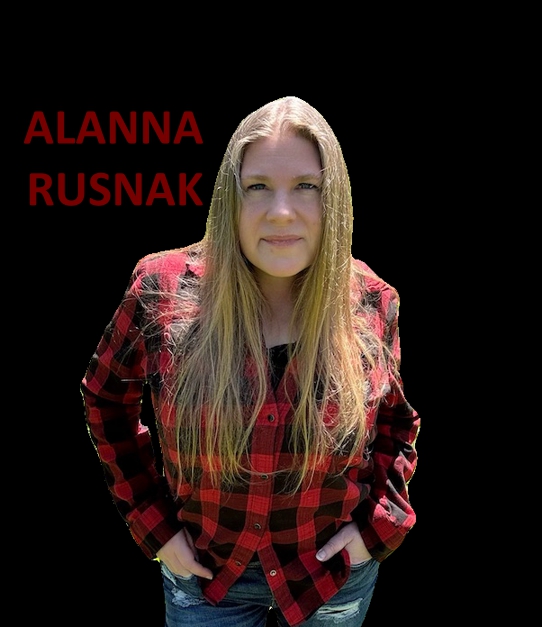
Check-in with Alanna Rusnak

In this post, we’ll be hearing from writer, editor, and publisher Alanna Rusnak. She updates us on her writing and publishing projects, while also offering us a glimpse into her inspirations as well as challenges. If you missed our original interview, take a look here: Interview with Alanna Rusnak

Check out Alanna’s author bio:

Alanna was born in the wrong decade and dreams of abandoning everything to live in a van and travel across Canada. She’ll call it “a book tour,” but it’s really an excuse to unleash her inner hippie.

A collector of typewriters and John Travolta VHS movies, she believes life is too short to not indulge in the things that bring you joy and in keeping with that philosophy, she left a stuffy office job of 18 years to launch a full-time indie press out of a chicken coop on her childhood property.

An author of literary and speculative fiction, Alanna likes to play in dark spaces, but always leaves room for redemption. Her latest novel is about burning down the world in order to set things right.

Settled in West Grey as a four-year-old, it has always been her home and source of inspiration and she’s working hard to build bridges between the various arts communities. With no immediate plans to abandon this, she will certainly leave it all behind the moment her husband gets on board with the van-life idea.

Alanna it’s been two years since our last interview. What did 2025 look like for you in your multiple roles as a writer, editor, and publisher? What’s on the horizon for 2026?

It’s actually hard to look back and articulate everything that happened in 2025 because the publishing world requires eyes forward at all times. As a solopreneur, I am keeping many balls in the air and though I’m always tired. I’m also always invigorated by the exciting projects that are constantly on the go.

I made a big decision in 2024 to keep my submissions closed in order to nurture my existing roster, roll out the titles already in my queue, and focus on follow up titles from writers already in my catalogue. This has been a game-changer in terms of workload and time management. I was working on an unsustainable (but totally exciting) publishing calendar that demanded a title was released every month. From a financial standpoint, this makes sense; from a human perspective, something had to give. The de-escalation has given me space to more fully invest in myself as a writer, and I learned that I have to treat myself like a client in order to find a good balance.

Now that we’re in 2026, I’m just beginning to see the effects of that 2024 decision. And as things are feeling more manageable, I’m able to push out titles with more care and discernment.

Who are your mentors or role models in the business? Tell us about one person who has inspired or supported you in your journey as a publisher.

I love following other scrappy little indie outfits who, like me, have a heart for writers and a desire to see them succeed. I’ve built a nice relationship with the owner of Byzantium Sky Press out of Delaware and we are often trading tips and tricks back and forth, commiserating over AI, and celebrating one another’s accomplishments through emails, Instagram DMs, and Zoom chats. It’s refreshing to find people who don’t look at you as competition, but as comrades in the same battle for creativity.

Chicken House Press is a flurry of activity! Alanna, tell us about your authors’ forthcoming appearances and readings. How can interested readers support their work?

Continue reading “Check-in with Alanna Rusnak”
Interviews

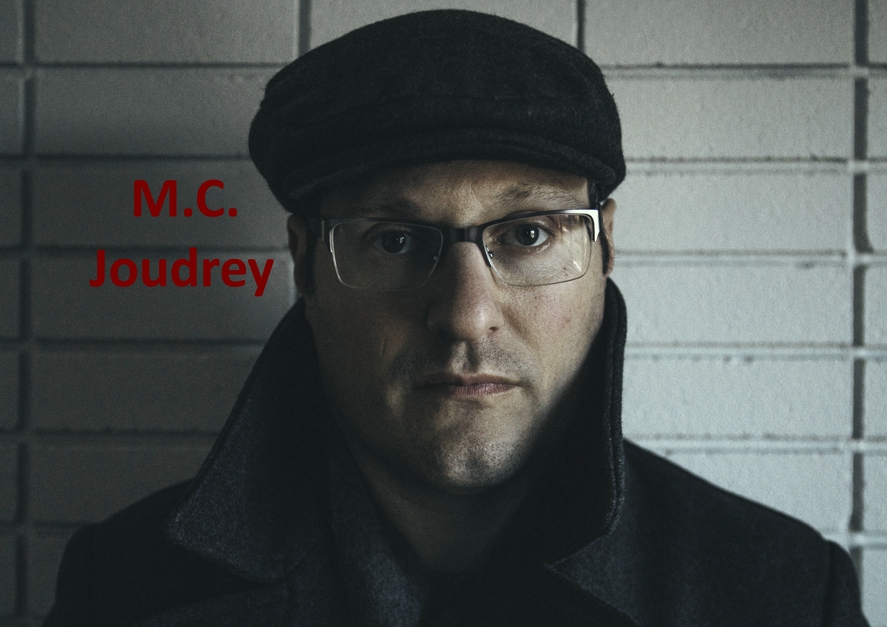
Interview with M.C. Joudrey

In this post, we’ll be hearing from M.C. Joudrey. He tells us about his sources of inspiration, shares networking advice for new writers, and drops a few hints about his work in progress. Check out his bio:

Image courtesy of M.C. Joudrey

M. C. Joudrey is an award winning Canadian writer, artist and designer. His second novel Of Violence and Cliché was released September 2013, followed by his collection of short stories Charleswood Road: Stories in August 2014, which was nominated for a 2015 John Hirsch Manitoba Book Award. His novel Fanonymous was released in 2019 and won the Independent Publisher gold medal for best work of fiction for Western Canada. It was also nominated for two Manitoba Book Awards, including the Margaret Laurence Award for best work of fiction. His forthcoming novel Marmalade Parade (Guernica Editions) releases May 2026. As a designer, his work has been awarded four Alcuin Design Book Awards and the Manuela Dias Manitoba Book Award for Design. He is also a bookbinder and a number of his works are held in galleries internationally.

Matt, you’re not just a bookbinder—you’re a bookmaker! You design and print books as well as do the layout in addition to the actual binding. You’re also known for using unconventional materials, such as stained glass, in this process. Tell us about your most ambitious bookmaking project to date. What sort of considerations went into the design and materials used?

I’m thinking about a book we are just starting to work on. I can’t say much, but it will be the most ambitious project we’ve done to date. What I can tell you is we will be taking our time with this one. It’s going to take a couple of years to see it to fruition. It will be challenging, to say the least, but exciting.

What inspires your book designs? Who are your mentors or role models in the business?

Everything is considered as inspiration. Magnificent things and trivial things, inanimate and alive, colour and halftones, sounds, smells, great design, bad design. It all inspires in some way. There’s no single person who serves as the bulk of inspiration, rather, an individual work that is scintillating, so much so that it shines without the sun.  

In addition to creating and designing, you also write! What does your average day or work week look like? How do you find balance with so many roles to fill?

I don’t. I haven’t slept in 20 years. I’ll run until there’s no wax left.

Matt, you travel a fair amount, attending events such as the Frankfurter Buchmessein Germany. What books do you pack when flying? And do you read ebooks?

Continue reading “Interview with M.C. Joudrey”
Interviews

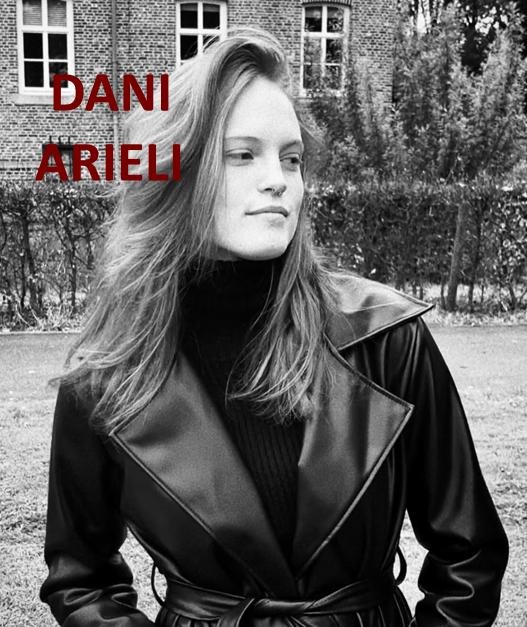
Interview with Dani Arieli

In this highly energized post, we’ll be learning a lot from writer, editor, and publicist Dani Arieli. She tells us about her passion for poetic language, describes her current work in progress, and offers heartfelt advice for new writers.

Check out her author bio:

Photo Credit: Nieram Arieli

Dani Arieli is a poet and author, Pushcart Prize nominee, and lover of weird, dark, and archaic literature. She has creative works featured in 7th-Circle PyriteBeyond WordsLothlorien Poetry Journal, and more. She is the marketing and publicity specialist for At Bay Press, and is currently working toward her Honours Bachelor of Creative Writing and Publishing degree at Sheridan College.

During most writing sessions, her black cat sits atop her lap while she fervently taps away at her keyboard; she very much enjoys having a writing partner who can meow.

Dani, a Pushcart Prize nomination is a big deal—congrats! How did you process the nomination news and has this changed how you view your own writing?

First of all, thank you for the kind words of praise! When I received the E-mail detailing my nomination, I can tell you right now—I practically froze. I was in sheer disbelief, as the story which had been nominated, Across the Marsh, was my second-ever short-story publication, as well as my first-ever online publication. Of course, with this nomination, came the rather terse realisation that this is now the bar. So, with my current W-i-Ps—be it short-story or manuscript—I find myself constantly, and rather erratically, poring over my writing as I convince myself this, too, is Pushcart-worthy… And hopefully, they are! But, the pessimist in me says otherwise. All I know is that my life’s purpose feels tied to usurping this bar.

At what point did you realize you had a passion for poetic language? In what ways did your coursework at Sheridan College help you move forward to pursue writing as a career? What additional supports did you have along the way?  

Two words: My professor. I entered into my first-ever Poetry class/seminar in my early years at Sheridan College, and I knew nothing about the art of poetry. When I first presented my ‘poem’ to my professor, I was ready to listen to some minor substantive edits regarding syntax and word choice; but when my professor began to point out the facets of my poem that were, really, there without rhyme or reason (why did you choose to centre your text? why is this section in italics? is ‘purple’ truly the only way you can describe this object?), it became quickly apparent that my poem was simply… words. These selections from the English language did not occupy a rigorous or intended place within the poem! So, I began to think about ways to describe certain feelings, thoughts, ideas, people, places, struggles, desires, fears, depravities—until the abstract and subjective nature of my musings began to spread across the page like blood from a slick lesion. Now, and especially in my manuscript, I find myself resorting to poetic language when describing exposition; and, speaking of my manuscript—as I am writing from the depraved and infamous mind of France’s notorious sadist, the Marquis de Sade—poetic language seems only fitting for such mad musings. There is a haunting beauty in the poetic language, and my professor helped me realise this during that single class at Sheridan.

Continue reading “Interview with Dani Arieli”
Interviews

Interview with Jack Stilborn

In this post, we’ll be hearing from Canadian author Jack Stilborn. Check out his bio:

Jack Stilborn lives in Ottawa, Canada, and writes fiction and short stories. The Tyranny of Good Intentions, his debut novel about love, death and a great deal of politics on a condominium board, is now available from Chicken House Press.

Photo Credit: South March Studio, Kanata, ON

He showed early promise with a comic story that made a cousin laugh so hard she threw up. He was then deflected by studies (double major in political science and English literature at the University of Saskatchewan; politics and philosophy B.A. at Oxford University; PhD. with dissertation on the thought of Alexis de Tocqueville at Western University). After that came life as a policy research analyst (Parliament), intergovernmental affairs advisor (Ontario government) and public servant (Ottawa). He also enjoys cycling, kayaking and (recently) cold water swimming; family life (Alex, Jessica, Christine and partner Linda); participating on volunteer boards and lots of reading, especially literary fiction and history.

Jack, tell us how the concept for your debut novel The Tyranny of Good Intentions came about. What helped propel you forward to finish the manuscript?

I have served on several condo boards of directors, as well as other volunteer boards. I started doing this while still working on my long-term day job as a research analyst working for Parliament (federalism and parliamentary governance issues). At a certain point, the light went on and I realized how much of national political life is captured in relations and behavior on these smaller boards. I was propelled forward because writing was a pleasure for me, perhaps an escape. Also by curiosity about how Andrew, the protagonist, would deal with challenges that are part of democratic citizenship.

The novel’s protagonist, Andrew Walmer, suddenly finds himself roped into a microcosm of our own societal landscape. What difficulties did you experience while constructing the plot? Did you have doubts while writing the draft?

Continue reading “Interview with Jack Stilborn”
Interviews

Interview with Carol Anne Shaw

Photo courtesy of Carol Anne Shaw

In this post, we’ll be hearing from Canadian author Carol Anne Shaw. Check out her author bio:

Carol Anne Shaw, resident of Cowichan Valley on Vancouver Island, is the author of the award-winning Hannah series, plus four young adult novels, and writing guidebook That’s Another Story: Writing with Heart.

For budding writers, the prospect of completing a full-length manuscript can feel hopelessly out of reach. Carol Anne, what advice do you have for writers who are just starting out with a book idea?

Oh, I love this question! And it makes me think of a famous quote by writer Gene Wolfe, who said, “You never learn how to write a book. You only learn how to write the book you’re writing.” So true! I thought once I had a book published, it would be easy street from that point on. Nope.

Writing every book has had its ups and downs, just like the one before it, but I’ve learned that that’s just the way it goes. The middle part is the hardest! That’s when the idea is no longer new and shiny, and it starts to feel like real work. My advice to writers just beginning would be, don’t overthink it. Don’t get hung up on editing or minute details. Just get the ideas down as they come.

If you’re stuck, write a random scene—one that will show up at some point in the novel. You can stitch everything together later on. And probably the most important thing of all? Turn off your phone, or put it in another room. Distractions will KILL your focus.

Carol Anne, share 3 ways you push through a plot snag.

Ew. Plot snags are beasts. Usually, I shut things down and go for a walk. Or, I write a random scene that I know I’ll be able to use in another part of the novel. That keeps my confidence up and the wheels in motion. The third “trick” might be opening a book by an author I admire and just familiarizing myself with how other writers weave stories. I learn so much from them.

In addition to writing, you give back to the community by speaking to groups of children. Your presentations have been described as “fascinating and inspiring.” What has been the most surprising part about giving these author talks? In what ways does this sort of public speaking differ from your previous experience as a high school visual arts teacher?

Continue reading “Interview with Carol Anne Shaw”
Interviews

Interview with Merilyn Simonds

In this post, we’ll be hearing from Canadian author Merilyn Simonds. She shares with us her inspirations, describes her writing process, and gives us a sneak peek into her next work in progress! Check out her author bio:

Merilyn Simonds is the internationally published author of 22 books, including the novel The Holding, a New York Times Book Review Editors’ Choice, and the Canadian classic nonfiction novel, The Convict Lover, a finalist for the Governor General’s Award. Among her best-selling nonfiction is A New Leaf, the story of her gardens north of Kingston, and Gutenberg’s Fingerprint, a meditation on reading, writing, and the future of the printed book. Her most recent book—Woman, Watching, whichwon the Foreword Indies Editor’s Choice Nonfiction Award for 2022is an innovative memoir/biography of Louise de Kiriline Lawrence, an extraordinary recluse who changed the way we see birds. Simonds memoir, Walking with Beth: Conversations with my 100-Year-Old Friend is forthcoming from Random House Canada in September, 2025.

Louise de Kiriline Lawrence, who is the focus of your novel Woman, Watching: Louise de Kiriline Lawrence and the Songbirds of Pimisi Bay, was a neighbour of yours. For this book, you’ve woven your own memories of Louise into a biographical narrative. How much research did this manuscript require? Were there any parts of the research or writing process that gave you pause?

Woman, Watching is not a novel, although it’s hard to say exactly what it is: not a biography although it is biographical, and not a memoir although there are threads of my own memories and observations through the book. Louise was what we call “a country neighbour” which is not the person next door, as in the city, but anyone within driving distance. We lived on opposite sides of a large lake, and about an hour apart by car. But at a time when writers were thin on the ground in northern Ontario, we were certain writerly neighbors. 

The research was fascinating and daunting: it absorbed a couple of years, mostly going through Louise’s 26 boxes of text archives and dozens of boxes of image archives at Library and Archives Canada in Ottawa. Covid intervened, closing the archives, but the archivists arranged to have hundreds of pages of letters reproduced digitally, A close reading of Louises’s vast correspondences—mostly with her mother whom she wrote to every Sunday for 40 years, but also with professional and amateur ornithologists around the world—provided the foundation for the book. I also searched high and low to acquire all of her scientific and popular articles and books, many of which provided first-hand accounts of her field studies of birds, which I reproduced in the book. Unlike most biographies, I was intent on allowing the reader to get to know Louise as I had, through her own voice.

The whole project gave me pause! Louise asked me to be her biographer in 1990 and it took me 30 years and the writing of about 10 other books to find a way to make good on that promise. I am not a scientist by profession or by nature, so the scientific literature she excelled at was often a challenge. I didn’t want to get that wrong. But the biggest challenge came from parts of her life that felt extremely private. How much should I tell? If she were alive and writing a memoir, what would she reveal? It helped to have known Louise: she was forthright, honest, principled. That helped me decide to include even the painful parts. 

Beginner writers are often told, “write what you know.” Merilyn, your book, The Lion in the Room Next Door, is a collection of short stories inspired by your own memories. Tell us about the process of writing that collection.

I actually believe that writers need to write what they don’t know. Writing for me is an exploration, whether of another person’s life, Like Louise’s and Beth’s in Walking with Beth, or an exploration of my own memories, not for the facts of them but for what they might mean.

As I was writing The Convict Lover—a process that took eight years—an image would suddenly pop up. The first was a lion walking down a hall. I pushed the image away and returned to Kingston Penitentiary, but the lion kept popping up. I finally stepped away from the prison and wrote the story of the lion in the room next door—there really was a lion in the hotel room next to where my family lived for six months, but no one ever saw it but me, so the story is about memory and what it means. I returned to the convict and the girl who brought him solace, but again and again some image would pop up—a gun, a machete, a Volkswagen van, a dead child—and I would have to write the story in order to clear my imagination for the book at hand. I think that the intense process of imagining the prison and more particularly the life of Peggy, a small-town girl much like me, shook loose significant, unresolved moments in my own life. 

A lion is often associated with courage, and writing about real-life experiences certainly takes a tremendous amount of it. At what point did you decide to write memoir and creative non-fiction?

Continue reading “Interview with Merilyn Simonds”
Interviews

Interview with Marianne K. Miller

In this post, we’ll be hearing from author Marianne K. Miller. She tells us about the process of writing her first novel, offers advice for new writers, and hints at a new work in progress! Check out her author bio:

Marianne K. Miller is a graduate of the Creative Writing Program at the University of Toronto. As an independent scholar and member of The Hemingway Society, she presented a paper, Hemingway in Toronto, at the 18th International Hemingway Conference in Paris, France. Her debut novel We Were the Bullfighters is published by Dundurn Press and was just nominated for the Best First Crime Novel Award given by the Crime Writers of Canada. She lives in Toronto.

Marianne, what drove your decision to study creative writing? And has getting published changed how you view your own writing?

I always enjoyed writing. As a lawyer, I wrote letters and pleadings, discovery reports. As an adjudicator and mediator, I wrote orders for a tribunal. Many people ask why are so many lawyers writers? I think that is because lawyers are, at heart, story tellers whether it is on paper or in a court room, their goal is to set out a credible story for the position they are putting forth.  But the idea of not having facts and law to rely on when I was writing kind of frightened me and so that’s why I signed up for a creative writing course. It was a challenge. I was used to a very precise way of writing and I had to loosen up.

How did you first learn about The Hemingway Society? What attracted you to become a member?

Continue reading “Interview with Marianne K. Miller”
Interviews

Interview with Laura Frost

In this post, we’ll be hearing from author and writing contest judge Laura Frost. Check out her author bio:

Photo credit: S.L. @2beinthemoment

Laura Frost is an award-winning author of novels and short stories, and her debut novel, Seeking Sasha, will hit bookshelves this fall. Laura has been published in numerous journals and collections, and she is a returning judge for an international short story competition. An amateur baker and former wildlife biologist from northern Canada, Laura explores the world with her family, seeking out adventure to both calm and stir her writing muse. 

Laura, you’ve been practicing creative writing since childhood but only recently began submitting work for publication consideration. What drove your decision to begin sending manuscripts out? Has getting published changed how you view your own writing?

Although I’ve dabbled in writing my whole life, completing my first novel was the turning point in my writing journey. I hadn’t written my novel with the intent to publish, but both my cousin and my husband read my draft and enjoyed it so much, they begged me to get it published so they could share it with others.

As I quickly learned, getting a book published is no easy feat. Because the publishing industry is so competitive, I decided to write short stories and submit them to literary magazines as a way to build my author portfolio and grow my audience, and I continued to write novels as I worked through the process of submissions. I have now been published in ten different magazines and collections, an accomplishment which has been an important part of my journey towards finding a publisher for my debut novel. 

Having numerous short stories published has allowed me to trust in myself more as a writer, and to not get as discouraged when rejections land in my inbox. I have learned just how subjective the publishing industry is. If one of my stories doesn’t work for a particular publisher, it doesn’t mean it’s bad, it’s just not the right fit for them. Rejections and acceptances have helped me hone my skills as a writer, and they have helped build confidence in myself while also keeping me grounded.

Tell us how your book idea for Seeking Sasha came about. Did you have doubts while working on the draft? Laura, what helped propel you forward to finish the manuscript?

Continue reading “Interview with Laura Frost”
Interviews

Interview with Roz Nay

In this post, we’ll be hearing from author Roz Nay. I hope you are as thrilled as I am about this interview! (See what I did there?) Check out her author bio:

Photo Credit: Lisa Seyfried Photography

ROZ NAY’s debut novel, Our Little Secret, was a national bestseller, won the Douglas Kennedy Prize for best foreign thriller in France, and was nominated for the Kobo Emerging Writer Prize for Mystery and the Arthur Ellis Best First Novel Award. Her second bestselling novel, Hurry Home, was shortlisted for the Crime Writers of Canada Best Crime Novel award and The Hunted, her third, was nominated for Best Crime Novel in 2022. The Offing is her fourth novel. Roz has lived and worked in Africa, Australia, the US, and the UK. She now lives in British Columbia, Canada, with her husband and two children.

More details about Roz and The Offing can be found here.

Roz, your first novel, Our Little Secret, began as a creative writing assignment and grew into a full-length manuscript. Tell us about that process. At what point did you decide to pursue novel writing and what did you learn at those early stages of your writing-for-publication journey?

I only kept going with my first-ever manuscript because I missed writing class, and needed to hang onto some part of it. I just patchworked together a narrative around a voice I’d created in class, and wrote it over a year while my two little toddlers napped. I didn’t really have a clue what I was doing, other than that I’d built a world I was enjoying writing. When I look back now, that time was fairly chaotic but what I learned most was that, when you have a story you want to tell, one way or another you get it done.

Image courtesy of Penguin Random House; Cover design: Emma Dolan

Beginning writers are often told, “write what you know.” For your thriller Hurry Home, the inspiration stemmed from your career in child services. Your newest book, The Offing, draws on your experiences while traveling in Australia. Roz, what does your writing process look like? How much preliminary research is required and at what point do you forge ahead with writing a draft?

Continue reading “Interview with Roz Nay”
Interviews

Interview with E.J. Nash

In today’s post, E.J. Nash tells us how she fits her writing into a packed schedule, gives advice to new writers on creating an internet presence, and talks about… Hawaiian pizza! (Hint: it’s writing-related) Check out her author bio:

Photographer Trina Koster

E.J. Nash holds a bachelor’s degree from The University of Western Ontario in Creative Writing and English Language & Literature, and a master’s degree in Information Studies from McGill University. Her work has been published by CBC, The Globe and Mail, Nature, Woman’s World, and in various literary magazines. She is an American-Canadian writer & librarian currently located in Ottawa.

E.J., you write a variety of fiction, non-fiction, and performance pieces. How do you arrange time for writing?

I like to get up early and write as much as I can before work, and I’ll write on my lunch break if the planets align. In the evening my brain has turned into a potato, so that’s when I crash in bed.

Downloading Google Docs on my phone has been a game changer. Most of my writing is done on my phone, and I edit on my computer. Writing on my phone gives me the flexibility to write anywhere! Plus, I’m not scared about losing my documents since they’re all hosted in the cloud.

Do you prefer to read books in e-book or physical book format? What are you reading these days? Which contemporary authors do you recommend checking out?

I read both print books and eBooks. Most of my day is spent in front of a screen, and I can feel my retinas crying for mercy, so it’s nice to look at a print book. On the other hand, some of the books I read are only available as eBooks, so I’m happy to scroll to my heart’s content.

Continue reading “Interview with E.J. Nash”