What has Pauline Shen been up to? What can we expect to see from her next?
Season Summary: Winter 2025-26
My short story “Word Processor” is published in print with BlankSpacesMagazine’s March 2026 issue.
In case you missed it, check out these awesome interviews! You’ll find recent words of wisdom from M.C. Joudrey and Dani Arieli of At Bay Press. More to come—stay tuned.
Updates & Work in Progress: Spring 2026
I’ve started a YouTube Channel! More content coming soon. Be sure to subscribe.
I’m now on Instagram. Follow my content @ZenPaulineShen.
SUBMISSION CALL: I’m looking for guest bloggers to contribute articles on the topic of writing. Yes, this is a paid publication opportunity. Read the details and submit your work here. Deadline: June 30, 2026.
What I’m Reading: Spring 2026
This season, I want to know what you’re reading. Let me know by commenting below.
And that’s it. Enjoy spring. Start the conversation by commenting below. Stay tuned for my next blog post. Wanna get it in your email inbox? Subscribe to stay informed of my newest articles, interviews, and more.
Cover Image: Photo by Ameruverse Digital Marketing Media on Pexels.com
In this post, we’ll be hearing from M.C. Joudrey. He tells us about his sources of inspiration, shares networking advice for new writers, and drops a few hints about his work in progress. Check out his bio:
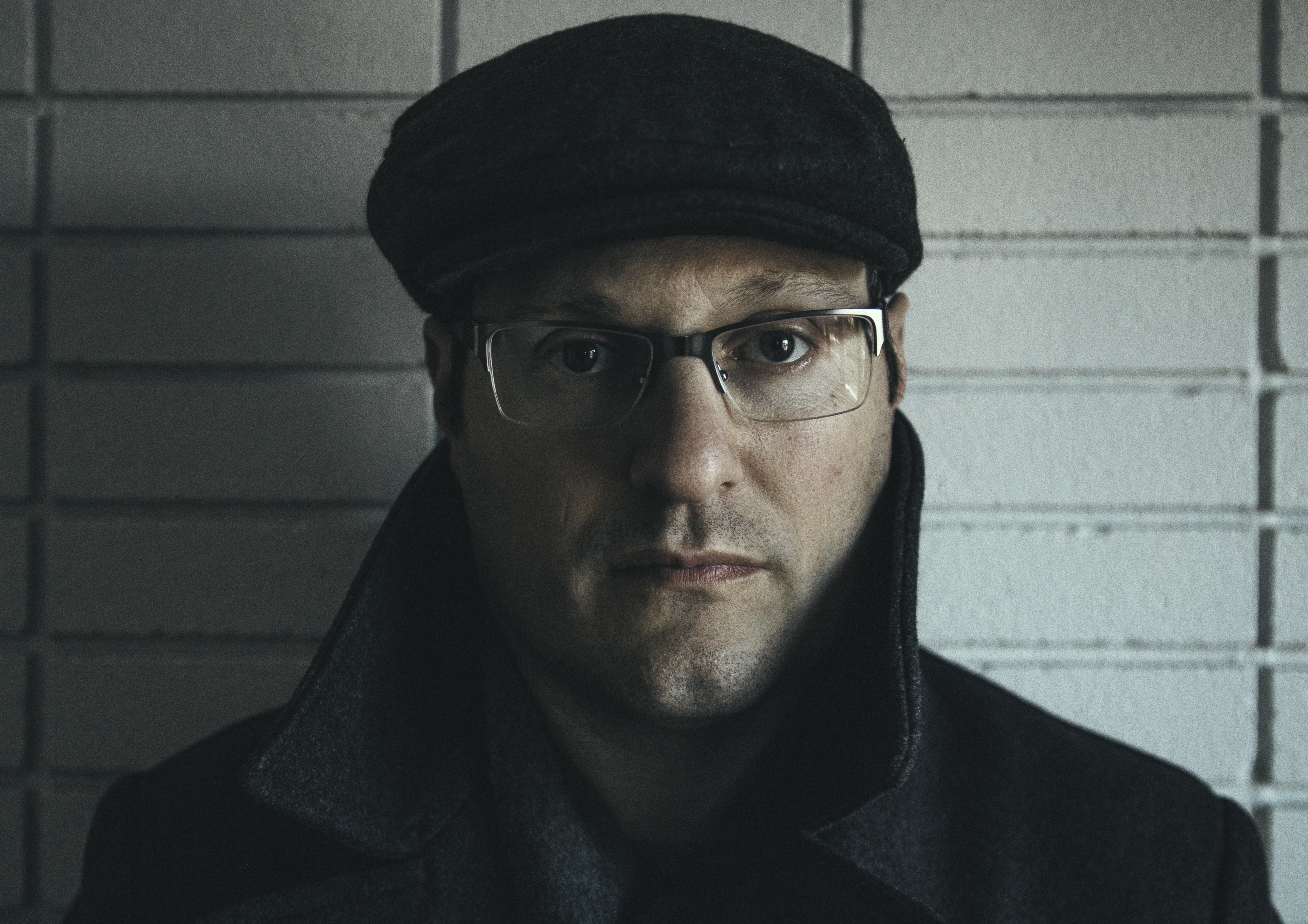
Image courtesy of M.C. Joudrey
M. C. Joudrey is an award winning Canadian writer, artist and designer. His second novel Of Violence and Cliché was released September 2013, followed by his collection of short stories Charleswood Road: Stories in August 2014, which was nominated for a 2015 John Hirsch Manitoba Book Award. His novel Fanonymous was released in 2019 and won the Independent Publisher gold medal for best work of fiction for Western Canada. It was also nominated for two Manitoba Book Awards, including the Margaret Laurence Award for best work of fiction. His forthcoming novel Marmalade Parade (Guernica Editions) releases May 2026. As a designer, his work has been awarded four Alcuin Design Book Awards and the Manuela Dias Manitoba Book Award for Design. He is also a bookbinder and a number of his works are held in galleries internationally.
Matt, you’re not just a bookbinder—you’re a bookmaker! You design and print books as well as do the layout in addition to the actual binding. You’re also known for using unconventional materials, such as stained glass, in this process. Tell us about your most ambitious bookmaking project to date. What sort of considerations went into the design and materials used?
I’m thinking about a book we are just starting to work on. I can’t say much, but it will be the most ambitious project we’ve done to date. What I can tell you is we will be taking our time with this one. It’s going to take a couple of years to see it to fruition. It will be challenging, to say the least, but exciting.
What inspires your book designs? Who are your mentors or role models in the business?
Everything is considered as inspiration. Magnificent things and trivial things, inanimate and alive, colour and halftones, sounds, smells, great design, bad design. It all inspires in some way. There’s no single person who serves as the bulk of inspiration, rather, an individual work that is scintillating, so much so that it shines without the sun.
In addition to creating and designing, you also write! What does your average day or work week look like? How do you find balance with so many roles to fill?
I don’t. I haven’t slept in 20 years. I’ll run until there’s no wax left.
Matt, you travel a fair amount, attending events such as the Frankfurter Buchmessein Germany. What books do you pack when flying? And do you read ebooks?
What has Pauline Shen been up to? What can we expect to see from her next?
Season Summary: Autumn 2025
ScrawlPlace published my Camino story “Et Suseia.”
My nonfiction article “Balancing Writing Projects” is published in print with BlankSpacesMagazine’s December 2025 issue.
Updates & Work in Progress: Winter 2025-26
I have a forthcoming release with Blank Spaces Magazine‘s March 2026 issue. More details soon.
Check out my blog in case you missed these awesome interviews. I am delighted to partner with editors, writers, and publicists to bring you an insider scoop on what’s going on in the industry. Many more exciting interviews yet to come!
SUBMISSION CALL: I’m looking for guest bloggers to contribute articles on the topic of writing. Yes, this is a paid publication opportunity. Read the details and submit your work here.
What I’m Reading: Winter 2025-26
I read Sara Gruen’s Water for Elephants. It is my first experience with this story as I had never read it nor seen the film adaptation. A heart-wrenching yet beautiful page-turner.
I also read Jack Stilborn’s The Tyranny of Good Intentions. Have you seen my blog interview with this author? Check it out!
And for the winter, I’m already part way through a good ‘ol binge read of Jane Austen’s novels.
And that’s it. Enjoy winter. Start the conversation by commenting below. Stay tuned for my next blog post. Wanna get it in your email inbox? Subscribe to stay informed of my newest articles, interviews, updates, and more.
Cover Image: Photo by Ameruverse Digital Marketing Media on Pexels.com
In this post, we’ll be hearing from Canadian author Carol Anne Shaw. Check out her author bio:
Carol Anne Shaw, resident of Cowichan Valley on Vancouver Island, is the author of the award-winning Hannah series, plus four young adult novels, and writing guidebook That’s Another Story: Writing with Heart.
For budding writers, the prospect of completing a full-length manuscript can feel hopelessly out of reach. Carol Anne, what advice do you have for writers who are just starting out with a book idea?
Oh, I love this question! And it makes me think of a famous quote by writer Gene Wolfe, who said, “You never learn how to write a book. You only learn how to write the book you’re writing.” So true! I thought once I had a book published, it would be easy street from that point on. Nope.
Writing every book has had its ups and downs, just like the one before it, but I’ve learned that that’s just the way it goes. The middle part is the hardest! That’s when the idea is no longer new and shiny, and it starts to feel like real work. My advice to writers just beginning would be, don’t overthink it. Don’t get hung up on editing or minute details. Just get the ideas down as they come.
If you’re stuck, write a random scene—one that will show up at some point in the novel. You can stitch everything together later on. And probably the most important thing of all? Turn off your phone, or put it in another room. Distractions will KILL your focus.
Carol Anne, share 3 ways you push through a plot snag.
Ew. Plot snags are beasts. Usually, I shut things down and go for a walk. Or, I write a random scene that I know I’ll be able to use in another part of the novel. That keeps my confidence up and the wheels in motion. The third “trick” might be opening a book by an author I admire and just familiarizing myself with how other writers weave stories. I learn so much from them.
In addition to writing, you give back to the community by speaking to groups of children. Your presentations have been described as “fascinating and inspiring.” What has been the most surprising part about giving these author talks? In what ways does this sort of public speaking differ from your previous experience as a high school visual arts teacher?
What has Pauline Shen been up to? What can we expect to see from her next?
Season Summary: Summer 2025
My Camino story “Et Suseia” is published with Scrawl Place. This piece began as a 500-word contest entry and later, with a year’s worth of revisions, grew into something more substantial.
Check out my blog in case you missed these awesome interviews. I am delighted to partner with editors, writers, and publicists to bring you an insider scoop on what’s going on in the industry.
Updates & Work in Progress: Autumn 2025
Be sure to subscribe if you haven’t done so already. I’ll be streamlining my marketing and publicity efforts; this means fewer social media interactions. Check back on my website or blog for information on my writing and visual art projects.
What I’m Reading: Autumn 2025
I read Anne Tyler’s Three Days in June. Her characters are true to life. If you have never read Anne Tyler’s work before, I highly recommend reading any (or all!) of her books. She is my favourite contemporary author.
I re-read L.M. Montgomery’s Anne of Green Gables. There are so many rich descriptions and timeless characters in this story. And great nuggets of wisdom too! I followed this up with The Blue Castle, which is a lesser-known title from the same author.
I have just begun reading Sara Gruen’s Water for Elephants. It is my first experience with this story as I have never read it nor seen the film adaptation. A heart-wrenching yet beautiful page-turner.
And that’s it. Enjoy autumn. Start the conversation by commenting below. Stay tuned for my next blog post. Wanna get it in your email inbox? Subscribe to stay informed of my newest articles, story reviews, updates, and more.
Cover Image: Photo by Ameruverse Digital Marketing Media on Pexels.com
If you’re writing for publication, you need to know where your work will fit. After you’ve written a short story (or poem, or nonfiction piece…), you’ll need to send it somewhere. But where? Do you simply send your work to any and all journals that have an open submission call?
Or should you devote some time to reading current literary journals? It is a good idea to look for the best fit for your writing, so you ought to consider reading a selection of journals first. Now wait… there are so many literary journals out there! So, to avoid being overwhelmed I’ve developed a system to help narrow the field when you’re just starting out. It goes like this:
How does a writer organize different projects? PART TWO
In PART ONE of this topic, we established what sort of projects a writer must balance in order to move forward in the profession. The full scope involves writing, but a significant amount of creativity and drive must go into levels of different projects, not just one. Even if you’re independently wealthy and have the luxury of just sitting down to type out your novel, there’s always the marketing side of things. So, you’d still need to devote time and energy to multiple projects in addition to your manuscript.
How does a writer organize different projects? PART ONE
First, let’s examine what is meant by “different projects.” Writers, effectively, are artists. It’s a craft that carries high risk in terms of outcome versus expenditure of time, energy and effort. In order to market anything in the artistic realm, the maker (in this case, writer) needs to consider the full scope of the endeavour. There’s a lot of talk from writers about the challenges of getting work done and whether “writer’s block” is indeed a real phenomenon. However, that’s just one aspect of the creative process. And it’s only a nugget of the profession overall. Does that sound strange? Let me explain.
In this post, we’ll be hearing from Canadian author Merilyn Simonds. She shares with us her inspirations, describes her writing process, and gives us a sneak peek into her next work in progress! Check out her author bio:
Merilyn Simonds is the internationally published author of 22 books, including the novel The Holding, a New York Times Book Review Editors’ Choice, and the Canadian classic nonfiction novel, The Convict Lover, a finalist for the Governor General’s Award. Among her best-selling nonfiction is A New Leaf, the story of her gardens north of Kingston, and Gutenberg’s Fingerprint, a meditation on reading, writing, and the future of the printed book. Her most recent book—Woman, Watching, whichwon the Foreword Indies Editor’s Choice Nonfiction Award for 2022—is an innovative memoir/biography of Louise de Kiriline Lawrence, an extraordinary recluse who changed the way we see birds. Simonds memoir, Walking with Beth: Conversations with my 100-Year-Old Friend is forthcoming from Random House Canada in September, 2025.
Louise de Kiriline Lawrence, who is the focus of your novel Woman, Watching: Louise de Kiriline Lawrence and the Songbirds of Pimisi Bay, was a neighbour of yours. For this book, you’ve woven your own memories of Louise into a biographical narrative. How much research did this manuscript require? Were there any parts of the research or writing process that gave you pause?
Woman, Watching is not a novel, although it’s hard to say exactly what it is: not a biography although it is biographical, and not a memoir although there are threads of my own memories and observations through the book. Louise was what we call “a country neighbour” which is not the person next door, as in the city, but anyone within driving distance. We lived on opposite sides of a large lake, and about an hour apart by car. But at a time when writers were thin on the ground in northern Ontario, we were certain writerly neighbors.
The research was fascinating and daunting: it absorbed a couple of years, mostly going through Louise’s 26 boxes of text archives and dozens of boxes of image archives at Library and Archives Canada in Ottawa. Covid intervened, closing the archives, but the archivists arranged to have hundreds of pages of letters reproduced digitally, A close reading of Louises’s vast correspondences—mostly with her mother whom she wrote to every Sunday for 40 years, but also with professional and amateur ornithologists around the world—provided the foundation for the book. I also searched high and low to acquire all of her scientific and popular articles and books, many of which provided first-hand accounts of her field studies of birds, which I reproduced in the book. Unlike most biographies, I was intent on allowing the reader to get to know Louise as I had, through her own voice.
The whole project gave me pause! Louise asked me to be her biographer in 1990 and it took me 30 years and the writing of about 10 other books to find a way to make good on that promise. I am not a scientist by profession or by nature, so the scientific literature she excelled at was often a challenge. I didn’t want to get that wrong. But the biggest challenge came from parts of her life that felt extremely private. How much should I tell? If she were alive and writing a memoir, what would she reveal? It helped to have known Louise: she was forthright, honest, principled. That helped me decide to include even the painful parts.
Beginner writers are often told, “write what you know.” Merilyn, your book, The Lion in the Room Next Door, is a collection of short stories inspired by your own memories. Tell us about the process of writing that collection.
I actually believe that writers need to write what they don’t know. Writing for me is an exploration, whether of another person’s life, Like Louise’s and Beth’s in Walking with Beth, or an exploration of my own memories, not for the facts of them but for what they might mean.
As I was writing The Convict Lover—a process that took eight years—an image would suddenly pop up. The first was a lion walking down a hall. I pushed the image away and returned to Kingston Penitentiary, but the lion kept popping up. I finally stepped away from the prison and wrote the story of the lion in the room next door—there really was a lion in the hotel room next to where my family lived for six months, but no one ever saw it but me, so the story is about memory and what it means. I returned to the convict and the girl who brought him solace, but again and again some image would pop up—a gun, a machete, a Volkswagen van, a dead child—and I would have to write the story in order to clear my imagination for the book at hand. I think that the intense process of imagining the prison and more particularly the life of Peggy, a small-town girl much like me, shook loose significant, unresolved moments in my own life.
A lion is often associated with courage, and writing about real-life experiences certainly takes a tremendous amount of it. At what point did you decide to write memoir and creative non-fiction?




 Pauline Shen