Interviews

Interview with Roz Nay

In this post, we’ll be hearing from author Roz Nay. I hope you are as thrilled as I am about this interview! (See what I did there?) Check out her author bio:

Photo Credit: Lisa Seyfried Photography

ROZ NAY’s debut novel, Our Little Secret, was a national bestseller, won the Douglas Kennedy Prize for best foreign thriller in France, and was nominated for the Kobo Emerging Writer Prize for Mystery and the Arthur Ellis Best First Novel Award. Her second bestselling novel, Hurry Home, was shortlisted for the Crime Writers of Canada Best Crime Novel award and The Hunted, her third, was nominated for Best Crime Novel in 2022. The Offing is her fourth novel. Roz has lived and worked in Africa, Australia, the US, and the UK. She now lives in British Columbia, Canada, with her husband and two children.

More details about Roz and The Offing can be found here.

Roz, your first novel, Our Little Secret, began as a creative writing assignment and grew into a full-length manuscript. Tell us about that process. At what point did you decide to pursue novel writing and what did you learn at those early stages of your writing-for-publication journey?

I only kept going with my first-ever manuscript because I missed writing class, and needed to hang onto some part of it. I just patchworked together a narrative around a voice I’d created in class, and wrote it over a year while my two little toddlers napped. I didn’t really have a clue what I was doing, other than that I’d built a world I was enjoying writing. When I look back now, that time was fairly chaotic but what I learned most was that, when you have a story you want to tell, one way or another you get it done.

Image courtesy of Penguin Random House; Cover design: Emma Dolan

Beginning writers are often told, “write what you know.” For your thriller Hurry Home, the inspiration stemmed from your career in child services. Your newest book, The Offing, draws on your experiences while traveling in Australia. Roz, what does your writing process look like? How much preliminary research is required and at what point do you forge ahead with writing a draft?

Continue reading “Interview with Roz Nay”
Interviews

Interview with E.J. Nash

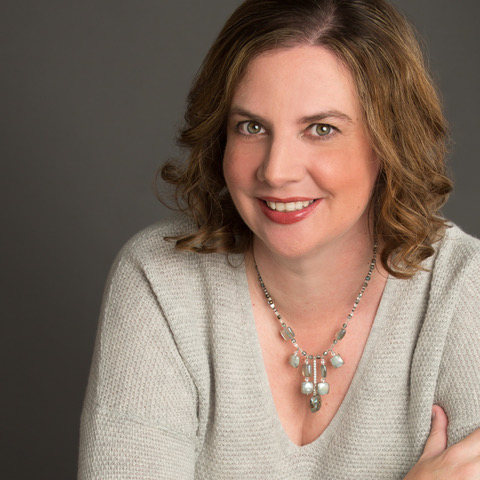
In today’s post, E.J. Nash tells us how she fits her writing into a packed schedule, gives advice to new writers on creating an internet presence, and talks about… Hawaiian pizza! (Hint: it’s writing-related) Check out her author bio:

Photographer Trina Koster

E.J. Nash holds a bachelor’s degree from The University of Western Ontario in Creative Writing and English Language & Literature, and a master’s degree in Information Studies from McGill University. Her work has been published by CBC, The Globe and Mail, Nature, Woman’s World, and in various literary magazines. She is an American-Canadian writer & librarian currently located in Ottawa.

E.J., you write a variety of fiction, non-fiction, and performance pieces. How do you arrange time for writing?

I like to get up early and write as much as I can before work, and I’ll write on my lunch break if the planets align. In the evening my brain has turned into a potato, so that’s when I crash in bed.

Downloading Google Docs on my phone has been a game changer. Most of my writing is done on my phone, and I edit on my computer. Writing on my phone gives me the flexibility to write anywhere! Plus, I’m not scared about losing my documents since they’re all hosted in the cloud.

Do you prefer to read books in e-book or physical book format? What are you reading these days? Which contemporary authors do you recommend checking out?

I read both print books and eBooks. Most of my day is spent in front of a screen, and I can feel my retinas crying for mercy, so it’s nice to look at a print book. On the other hand, some of the books I read are only available as eBooks, so I’m happy to scroll to my heart’s content.

Continue reading “Interview with E.J. Nash”
Interviews

Interview with Eileen Cook

In this post, we welcome author, speaker, and mentor Eileen Cook. She shares an abundance of helpful (and heartful) writing advice as well as a glimpse into what it was like when she first started out as a budding writer. Check out Eileen’s author bio:

Photo courtesy of Eileen Cook

Eileen Cook, author, speaker, and mentor lives in Vancouver, British Columbia. Her books are published with HMH, Simon and Schuster, and HarperCollins. Cook’s recent titles include You Owe Me a Murder, One Lie Too Many, and With Malice. Under the pen name Kate MacIntosh, she’s written a historical novel, The Champagne Letters. People Magazine chose this book as a December 2024 Best New Book saying: “this fun, fizzy novel is delicious.” She received the John Spray Award in 2018 for best mystery in Canada with her novel The Hanging Girl/One Lie Too Many. Her books have been optioned for film and TV, although she is still waiting a chance to walk the red carpet.

Eileen, you’re the author of several contemporary, middle grade, and thriller novels, as well as multiple non-fiction guidebooks for new writers. Are you working on a manuscript now? What can you tell us about your work in progress?

My most recent book, The Champagne Letters, was a big change for me as it was both adult and a dual timeline historical. It just came out in December 2024 with Gallery Books (Simon and Schuster) under a pen name to help brand it as different than other things I’ve written. At long last, a chance for my historical nerd side to come out and use all those random facts I’ve been gathering for years!

Even though the book just came out, I am already wading into another manuscript. I am the happiest when I have a book on the go. The current book is also a dual timeline with a character in the present who is traveling to England after a death. It’s still very muddy and unclear how it will unspool, but I’m enjoying doing a bunch of research and seeing where it may go.

Eileen, you’ve got a wealth of experience with writing-for-publication. Tell us a bit about how it felt when you first started sending out manuscripts. What drove your decision to continue writing and what were your next steps? At what point did you begin speaking to audiences and mentoring others?

Continue reading “Interview with Eileen Cook”
Candid Talks, Writing

What’s the point …of Submitting to Literary Journals?

I saw this question on a discussion forum some time ago, and thought it was a good one. The person who posed it was just starting out as a writer and unsure about navigating all the different publication outlets. Should a writer invest time and resources in short stories and micro fiction for the purpose of submitting to journals? Is this a wise choice for a writer whose ultimate goal is to finish a novel? Can you make a living from submitting smaller works of fiction? What, really, is the point of having your work appear in those little journals anyways? Why not just go for the full manuscript from the beginning and skip all the rest?

Continue reading “What’s the point …of Submitting to Literary Journals?”
Candid Talks

Making Room for Reading

Reading is an imperative activity for a writer. Tackle that unread pile! I’ve got three tips to share that will help you make more room in your week for reading. When you see my explanation for each, you’ll notice that all three tips meld into each other like one super-hack. I hope this will assist you in reaching your reading goals.

Continue reading “Making Room for Reading”
Interviews

Interview with Cadence Mandybura

In today’s post we’re hearing from Cadence Mandybura, writer and editor located in Victoria, British Columbia. Cadence tells us about her free write practice, describes the writing-for-publication process from her early writing days, and recommends resources for new writers.

Cadence, in addition to being a published writer, you are a contract fiction editor. What drew you to become a professional editor? What insights have you gained from the editor’s seat that emerging Canadian writers should know about publishing?

I’ve loved editing since high school, when I was recruited to help with the school newspaper and started taking the craft of writing seriously. As someone who’s always been drawn to writing, I loved learning how to take a good piece of writing and make it even stronger.

My advice for writers is to understand what type of editing is appropriate for their project and writing stage. For example, a developmental edit will focus on structure and story arc (useful for earlier drafts), whereas copy editing offers granular, sentence-level adjustments (best when the manuscript is almost final). Editors Canada has a good list of terms here. Starting with a critique or manuscript evaluation can help you assess if an editor is a good fit for your work.

Publishers vary in how much editing support they can offer their authors, and most will expect manuscripts to be polished before submission. For book-length projects, it’s often worth it to have your work professionally edited before you start submitting. Grants can help if cost is a barrier.

When you’re editing your own work, don’t try to fix everything in one go. Writing is complicated! Do several passes through your manuscript so you can focus on one element at a time. For example, you could do one pass looking for adjectives you could cut, another pass reading dialogue out loud, another pass reviewing scene transitions, etc.

Finally, be patient with yourself as you move through successive drafts. You’re making progress with every iteration!

Your fictional stories span multiple genres—speculative, science fiction, and fantasy. You also manage to add a dash of humour in places where we’d least expect. What inspires your stories and how do you stay upbeat while working through a writing project?

Continue reading “Interview with Cadence Mandybura”
Interviews

Interview with T.L. Tomljanovic

In this post, we’re hearing from T.L. Tomljanovic, freelance writer and communications specialist located in British Columbia, and member of the Federation of BC Writers. We’ll hear about T.L. Tomljanovic’s writing journey, recent publications, and some advice for new writers on ways to branch out and become part of the larger writing community.

You have a background as a freelance communications consultant, and then you got into writing fiction more recently. How long have you been writing overall and what made you decide to explore fiction?

I’ve been writing professionally for about 20 years. My first paid gig was for a Calgary publisher where I worked as a photo researcher. Outside my usual nine to five, I researched and wrote children’s non-fiction books to spec meaning I had a very clear set of guidelines—word count, reading level, chapter headings, etc. I always wanted to write fiction—I was and still am a voracious reader—but my fear of failure paralyzed. It took the bigger fear of the pandemic lockdown in 2020 to spur me into action. I wrote a story about a goat hunter and Carousel Magazine published it.

Your fictional stories span multiple genres—literary, science fiction, horror, and so on. What inspires your stories and what are your go-to strategies to ensure that you can approach your work-in-progress with enthusiasm?

Continue reading “Interview with T.L. Tomljanovic”
Interviews

Interview with Anne Wilkins

In this post, we’ll be hearing from the delightful Anne Wilkins, contest-winning writer of science fiction and horror, based out of New Zealand. Anne shares her experience with writing contests, anthologies, and persisting past letters of decline. Anne also opens up on the personal side of balancing writing with life events, family, and career decisions.

Anne, you’ve got heaps of writing achievements! Multiple contest awards, several runner-up spots and honorable mentions, and an ever-growing list of publications. How long have you been writing and what made you decide to enter competitions?

Oh wow, that’s so kind of you to say because I still very much feel like a beginner. I was that kid that loved creative writing in school, from primary right through to high school, but by the time I got to university there was no time for it. All I ended up doing at university was essays, most of them very boring (Land Law — I’m looking at you). Then fast forward to a career where I was a family lawyer, and I was kind of writing stories, but true ones, in affidavit form.

When I had children, I think I finally had the time and the head space to write creatively again. Most of my beginning stories were written for my children, stories about cats, fairies, witches. I realised how much I missed that creative side of my life — the joy you get from coming up with an idea, and transforming it into a story for someone to read.

Continue reading “Interview with Anne Wilkins”
Interviews

Interview with Galen Gower

In this post, we’re hearing from Galen Gower, writer and founder of Toad Shade Zine based in Memphis TN. Galen tells us about his creative process, shares his wisdom on incorporating feedback to develop as a creative writer, and gives us a sneak peek at an upcoming publishing venture.

Galen, you’ve started a Zine! What inspired you to launch the independent magazine, Toad Shade Zine? Tell us how it’s been going so far.

I literally decided I wanted to do a zine, bought the domain, blundered through making the website, and started sharing the submission call all in about three hours. I started out not telling anyone it was me doing it in case I really pet the rabbit with it, but it turned out pretty well.

I mentioned this in the second submission call, but the world really is full of things because people decide to do them and decide not to let fear or common sense stop them. I’ve never let not knowing what I’m doing stop me. Sometimes the results are disastrous, of course, but I’d rather go down swinging, you know?

Continue reading “Interview with Galen Gower”