Interviews

Interview with Dani Arieli

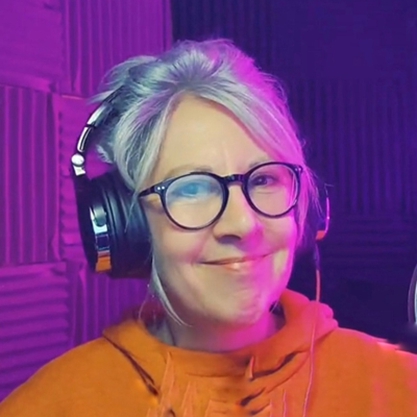
In this highly energized post, we’ll be learning a lot from writer, editor, and publicist Dani Arieli. She tells us about her passion for poetic language, describes her current work in progress, and offers heartfelt advice for new writers.

Check out her author bio:

Photo Credit: Nieram Arieli

Dani Arieli is a poet and author, Pushcart Prize nominee, and lover of weird, dark, and archaic literature. She has creative works featured in 7th-Circle PyriteBeyond WordsLothlorien Poetry Journal, and more. She is the marketing and publicity specialist for At Bay Press, and is currently working toward her Honours Bachelor of Creative Writing and Publishing degree at Sheridan College.

During most writing sessions, her black cat sits atop her lap while she fervently taps away at her keyboard; she very much enjoys having a writing partner who can meow.

Dani, a Pushcart Prize nomination is a big deal—congrats! How did you process the nomination news and has this changed how you view your own writing?

First of all, thank you for the kind words of praise! When I received the E-mail detailing my nomination, I can tell you right now—I practically froze. I was in sheer disbelief, as the story which had been nominated, Across the Marsh, was my second-ever short-story publication, as well as my first-ever online publication. Of course, with this nomination, came the rather terse realisation that this is now the bar. So, with my current W-i-Ps—be it short-story or manuscript—I find myself constantly, and rather erratically, poring over my writing as I convince myself this, too, is Pushcart-worthy… And hopefully, they are! But, the pessimist in me says otherwise. All I know is that my life’s purpose feels tied to usurping this bar.

At what point did you realize you had a passion for poetic language? In what ways did your coursework at Sheridan College help you move forward to pursue writing as a career? What additional supports did you have along the way?  

Two words: My professor. I entered into my first-ever Poetry class/seminar in my early years at Sheridan College, and I knew nothing about the art of poetry. When I first presented my ‘poem’ to my professor, I was ready to listen to some minor substantive edits regarding syntax and word choice; but when my professor began to point out the facets of my poem that were, really, there without rhyme or reason (why did you choose to centre your text? why is this section in italics? is ‘purple’ truly the only way you can describe this object?), it became quickly apparent that my poem was simply… words. These selections from the English language did not occupy a rigorous or intended place within the poem! So, I began to think about ways to describe certain feelings, thoughts, ideas, people, places, struggles, desires, fears, depravities—until the abstract and subjective nature of my musings began to spread across the page like blood from a slick lesion. Now, and especially in my manuscript, I find myself resorting to poetic language when describing exposition; and, speaking of my manuscript—as I am writing from the depraved and infamous mind of France’s notorious sadist, the Marquis de Sade—poetic language seems only fitting for such mad musings. There is a haunting beauty in the poetic language, and my professor helped me realise this during that single class at Sheridan.

Continue reading “Interview with Dani Arieli”
Interviews

Interview with Jack Stilborn

In this post, we’ll be hearing from Canadian author Jack Stilborn. Check out his bio:

Jack Stilborn lives in Ottawa, Canada, and writes fiction and short stories. The Tyranny of Good Intentions, his debut novel about love, death and a great deal of politics on a condominium board, is now available from Chicken House Press.

Photo Credit: South March Studio, Kanata, ON

He showed early promise with a comic story that made a cousin laugh so hard she threw up. He was then deflected by studies (double major in political science and English literature at the University of Saskatchewan; politics and philosophy B.A. at Oxford University; PhD. with dissertation on the thought of Alexis de Tocqueville at Western University). After that came life as a policy research analyst (Parliament), intergovernmental affairs advisor (Ontario government) and public servant (Ottawa). He also enjoys cycling, kayaking and (recently) cold water swimming; family life (Alex, Jessica, Christine and partner Linda); participating on volunteer boards and lots of reading, especially literary fiction and history.

Jack, tell us how the concept for your debut novel The Tyranny of Good Intentions came about. What helped propel you forward to finish the manuscript?

I have served on several condo boards of directors, as well as other volunteer boards. I started doing this while still working on my long-term day job as a research analyst working for Parliament (federalism and parliamentary governance issues). At a certain point, the light went on and I realized how much of national political life is captured in relations and behavior on these smaller boards. I was propelled forward because writing was a pleasure for me, perhaps an escape. Also by curiosity about how Andrew, the protagonist, would deal with challenges that are part of democratic citizenship.

The novel’s protagonist, Andrew Walmer, suddenly finds himself roped into a microcosm of our own societal landscape. What difficulties did you experience while constructing the plot? Did you have doubts while writing the draft?

Continue reading “Interview with Jack Stilborn”
Interviews

Interview with Carol Anne Shaw

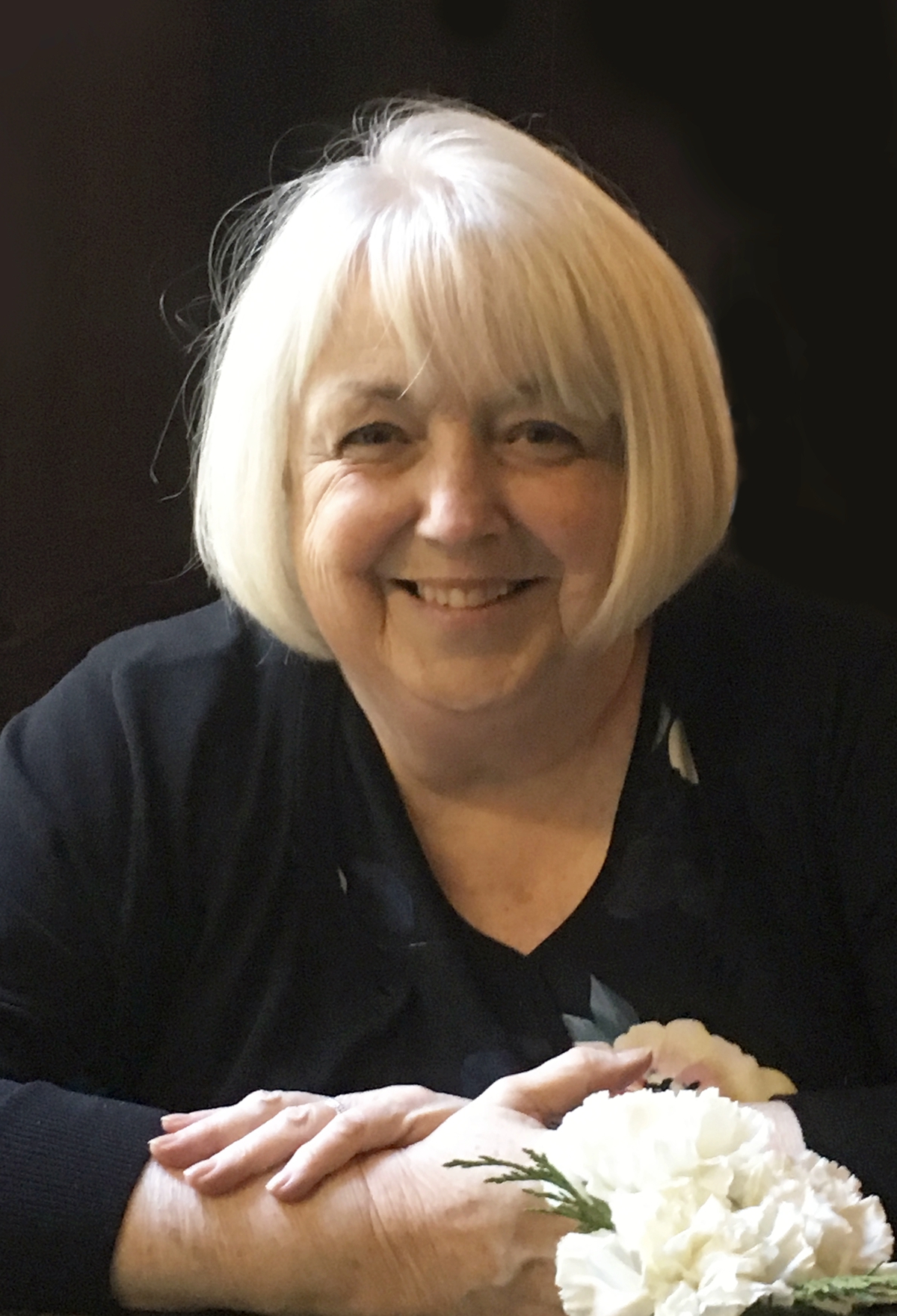
Photo courtesy of Carol Anne Shaw

In this post, we’ll be hearing from Canadian author Carol Anne Shaw. Check out her author bio:

Carol Anne Shaw, resident of Cowichan Valley on Vancouver Island, is the author of the award-winning Hannah series, plus four young adult novels, and writing guidebook That’s Another Story: Writing with Heart.

For budding writers, the prospect of completing a full-length manuscript can feel hopelessly out of reach. Carol Anne, what advice do you have for writers who are just starting out with a book idea?

Oh, I love this question! And it makes me think of a famous quote by writer Gene Wolfe, who said, “You never learn how to write a book. You only learn how to write the book you’re writing.” So true! I thought once I had a book published, it would be easy street from that point on. Nope.

Writing every book has had its ups and downs, just like the one before it, but I’ve learned that that’s just the way it goes. The middle part is the hardest! That’s when the idea is no longer new and shiny, and it starts to feel like real work. My advice to writers just beginning would be, don’t overthink it. Don’t get hung up on editing or minute details. Just get the ideas down as they come.

If you’re stuck, write a random scene—one that will show up at some point in the novel. You can stitch everything together later on. And probably the most important thing of all? Turn off your phone, or put it in another room. Distractions will KILL your focus.

Carol Anne, share 3 ways you push through a plot snag.

Ew. Plot snags are beasts. Usually, I shut things down and go for a walk. Or, I write a random scene that I know I’ll be able to use in another part of the novel. That keeps my confidence up and the wheels in motion. The third “trick” might be opening a book by an author I admire and just familiarizing myself with how other writers weave stories. I learn so much from them.

In addition to writing, you give back to the community by speaking to groups of children. Your presentations have been described as “fascinating and inspiring.” What has been the most surprising part about giving these author talks? In what ways does this sort of public speaking differ from your previous experience as a high school visual arts teacher?

Continue reading “Interview with Carol Anne Shaw”
Candid Talks, Writing

How to Choose a Literary Journal …for Submitting Your Work

If you’re writing for publication, you need to know where your work will fit. After you’ve written a short story (or poem, or nonfiction piece…), you’ll need to send it somewhere. But where? Do you simply send your work to any and all journals that have an open submission call?

Or should you devote some time to reading current literary journals? It is a good idea to look for the best fit for your writing, so you ought to consider reading a selection of journals first. Now wait… there are so many literary journals out there! So, to avoid being overwhelmed I’ve developed a system to help narrow the field when you’re just starting out. It goes like this:

Continue reading “How to Choose a Literary Journal …for Submitting Your Work”
Writing

Balancing Writing Projects – How to PART TWO

How does a writer organize different projects? PART TWO

In PART ONE of this topic, we established what sort of projects a writer must balance in order to move forward in the profession. The full scope involves writing, but a significant amount of creativity and drive must go into levels of different projects, not just one. Even if you’re independently wealthy and have the luxury of just sitting down to type out your novel, there’s always the marketing side of things. So, you’d still need to devote time and energy to multiple projects in addition to your manuscript.

Continue reading “Balancing Writing Projects – How to PART TWO”
Writing

Balancing Writing Projects – How to PART ONE

How does a writer organize different projects? PART ONE

First, let’s examine what is meant by “different projects.” Writers, effectively, are artists. It’s a craft that carries high risk in terms of outcome versus expenditure of time, energy and effort. In order to market anything in the artistic realm, the maker (in this case, writer) needs to consider the full scope of the endeavour. There’s a lot of talk from writers about the challenges of getting work done and whether “writer’s block” is indeed a real phenomenon. However, that’s just one aspect of the creative process. And it’s only a nugget of the profession overall. Does that sound strange? Let me explain.

Continue reading “Balancing Writing Projects – How to PART ONE”
Interviews

Interview with Merilyn Simonds

In this post, we’ll be hearing from Canadian author Merilyn Simonds. She shares with us her inspirations, describes her writing process, and gives us a sneak peek into her next work in progress! Check out her author bio:

Merilyn Simonds is the internationally published author of 22 books, including the novel The Holding, a New York Times Book Review Editors’ Choice, and the Canadian classic nonfiction novel, The Convict Lover, a finalist for the Governor General’s Award. Among her best-selling nonfiction is A New Leaf, the story of her gardens north of Kingston, and Gutenberg’s Fingerprint, a meditation on reading, writing, and the future of the printed book. Her most recent book—Woman, Watching, whichwon the Foreword Indies Editor’s Choice Nonfiction Award for 2022is an innovative memoir/biography of Louise de Kiriline Lawrence, an extraordinary recluse who changed the way we see birds. Simonds memoir, Walking with Beth: Conversations with my 100-Year-Old Friend is forthcoming from Random House Canada in September, 2025.

Louise de Kiriline Lawrence, who is the focus of your novel Woman, Watching: Louise de Kiriline Lawrence and the Songbirds of Pimisi Bay, was a neighbour of yours. For this book, you’ve woven your own memories of Louise into a biographical narrative. How much research did this manuscript require? Were there any parts of the research or writing process that gave you pause?

Woman, Watching is not a novel, although it’s hard to say exactly what it is: not a biography although it is biographical, and not a memoir although there are threads of my own memories and observations through the book. Louise was what we call “a country neighbour” which is not the person next door, as in the city, but anyone within driving distance. We lived on opposite sides of a large lake, and about an hour apart by car. But at a time when writers were thin on the ground in northern Ontario, we were certain writerly neighbors. 

The research was fascinating and daunting: it absorbed a couple of years, mostly going through Louise’s 26 boxes of text archives and dozens of boxes of image archives at Library and Archives Canada in Ottawa. Covid intervened, closing the archives, but the archivists arranged to have hundreds of pages of letters reproduced digitally, A close reading of Louises’s vast correspondences—mostly with her mother whom she wrote to every Sunday for 40 years, but also with professional and amateur ornithologists around the world—provided the foundation for the book. I also searched high and low to acquire all of her scientific and popular articles and books, many of which provided first-hand accounts of her field studies of birds, which I reproduced in the book. Unlike most biographies, I was intent on allowing the reader to get to know Louise as I had, through her own voice.

The whole project gave me pause! Louise asked me to be her biographer in 1990 and it took me 30 years and the writing of about 10 other books to find a way to make good on that promise. I am not a scientist by profession or by nature, so the scientific literature she excelled at was often a challenge. I didn’t want to get that wrong. But the biggest challenge came from parts of her life that felt extremely private. How much should I tell? If she were alive and writing a memoir, what would she reveal? It helped to have known Louise: she was forthright, honest, principled. That helped me decide to include even the painful parts. 

Beginner writers are often told, “write what you know.” Merilyn, your book, The Lion in the Room Next Door, is a collection of short stories inspired by your own memories. Tell us about the process of writing that collection.

I actually believe that writers need to write what they don’t know. Writing for me is an exploration, whether of another person’s life, Like Louise’s and Beth’s in Walking with Beth, or an exploration of my own memories, not for the facts of them but for what they might mean.

As I was writing The Convict Lover—a process that took eight years—an image would suddenly pop up. The first was a lion walking down a hall. I pushed the image away and returned to Kingston Penitentiary, but the lion kept popping up. I finally stepped away from the prison and wrote the story of the lion in the room next door—there really was a lion in the hotel room next to where my family lived for six months, but no one ever saw it but me, so the story is about memory and what it means. I returned to the convict and the girl who brought him solace, but again and again some image would pop up—a gun, a machete, a Volkswagen van, a dead child—and I would have to write the story in order to clear my imagination for the book at hand. I think that the intense process of imagining the prison and more particularly the life of Peggy, a small-town girl much like me, shook loose significant, unresolved moments in my own life. 

A lion is often associated with courage, and writing about real-life experiences certainly takes a tremendous amount of it. At what point did you decide to write memoir and creative non-fiction?

Continue reading “Interview with Merilyn Simonds”
Candid Talks, Writing

Giving Feedback

How much criticism is too much to give a writer? Is there such a thing?

This question always comes up in writer’s forums, particularly for those who are participating in a writing contest involving peer feedback. How do you go about offering an anonymous critique to an unknown writer for a piece that was written and submitted within a time crunch? Do you take it easy and focus on positives? Or should you comb through it and scrutinize every possible aspect? If a happy medium exists, is it fair to aim for that?

Continue reading “Giving Feedback”
Interviews

Interview with Marianne K. Miller

In this post, we’ll be hearing from author Marianne K. Miller. She tells us about the process of writing her first novel, offers advice for new writers, and hints at a new work in progress! Check out her author bio:

Marianne K. Miller is a graduate of the Creative Writing Program at the University of Toronto. As an independent scholar and member of The Hemingway Society, she presented a paper, Hemingway in Toronto, at the 18th International Hemingway Conference in Paris, France. Her debut novel We Were the Bullfighters is published by Dundurn Press and was just nominated for the Best First Crime Novel Award given by the Crime Writers of Canada. She lives in Toronto.

Marianne, what drove your decision to study creative writing? And has getting published changed how you view your own writing?

I always enjoyed writing. As a lawyer, I wrote letters and pleadings, discovery reports. As an adjudicator and mediator, I wrote orders for a tribunal. Many people ask why are so many lawyers writers? I think that is because lawyers are, at heart, story tellers whether it is on paper or in a court room, their goal is to set out a credible story for the position they are putting forth.  But the idea of not having facts and law to rely on when I was writing kind of frightened me and so that’s why I signed up for a creative writing course. It was a challenge. I was used to a very precise way of writing and I had to loosen up.

How did you first learn about The Hemingway Society? What attracted you to become a member?

Continue reading “Interview with Marianne K. Miller”
Candid Talks, Writing

Journaling

Photo by Andrea Piacquadio on Pexels.com

Up to now, the longest I’ve maintained a personal journal was when I was ages nine through twelve. At that time, it was a little pocket diary and my entries consisted of one or maybe two phrases. In my adult years, I’ve attempted and abandoned journal writing several times over. When it came to starting one, I usually had an idea of what I wanted to write about, but then my stamina just didn’t click-in. Who wants to waste time sitting with a journal when there’s no shortage of other things to do?

Plus, when it comes to actually writing the journal entry, doesn’t it feel awkward like you’ve been forced to engage one of those wallflower kids at the school dance? Or worse, you’re the wallflower kid getting pulled into conversation? Eeek!

Continue reading “Journaling”