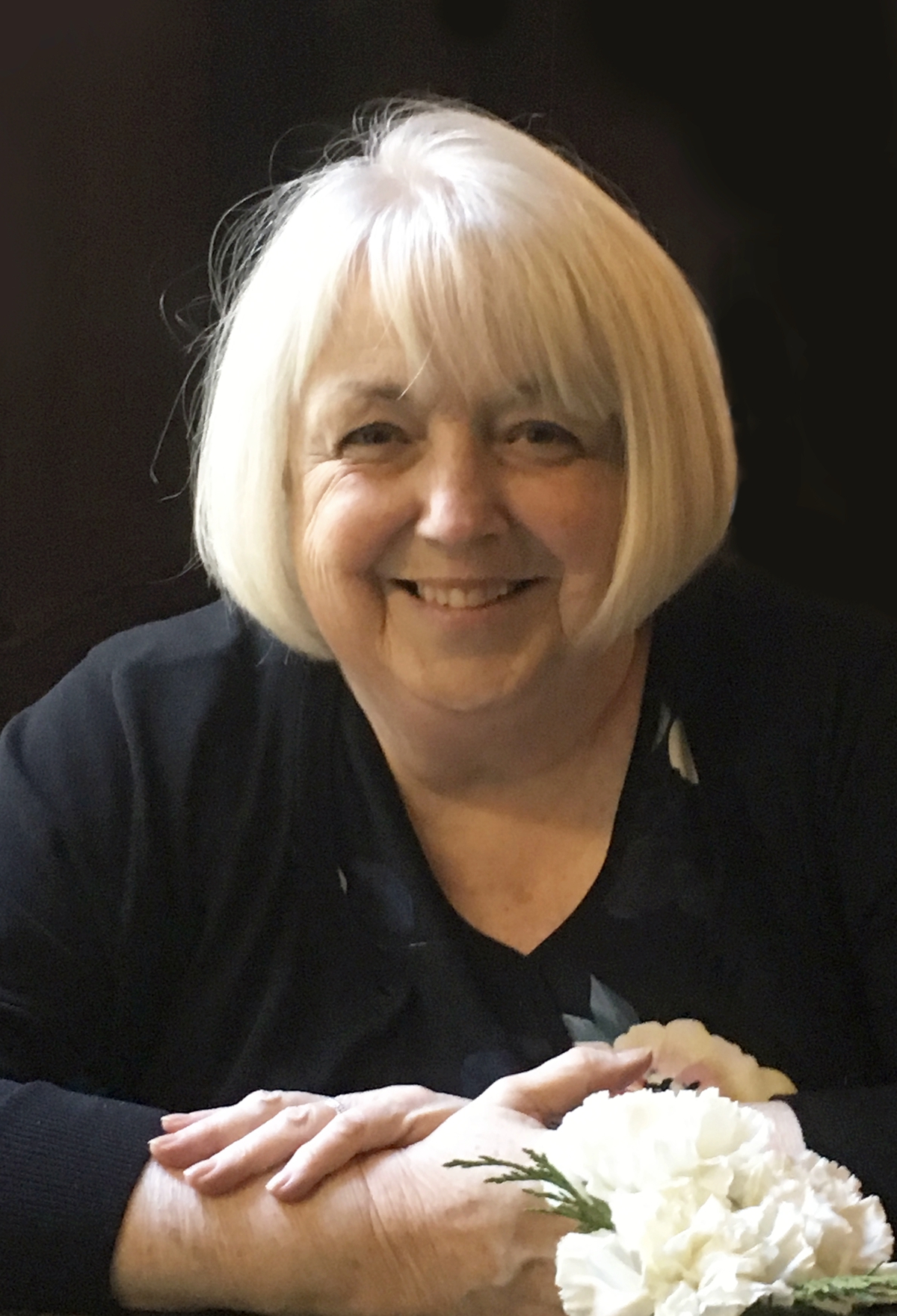
Pauline Shen’s work aims to showcase beauty and courage rooted in unexpected and challenging places. Her writing, art, and photography is published with Amethyst Review, Blank Spaces, Dreamers Creative Writing, Lighthouse Weekly, Quibble Lit, and The Signpost [Dorchester]. Pauline is located in London, Ontario.
How does a writer organize different projects? PART ONE
First, let’s examine what is meant by “different projects.” Writers, effectively, are artists. It’s a craft that carries high risk in terms of outcome versus expenditure of time, energy and effort. In order to market anything in the artistic realm, the maker (in this case, writer) needs to consider the full scope of the endeavour. There’s a lot of talk from writers about the challenges of getting work done and whether “writer’s block” is indeed a real phenomenon. However, that’s just one aspect of the creative process. And it’s only a nugget of the profession overall. Does that sound strange? Let me explain.
In this post, we’ll be hearing from Canadian author Merilyn Simonds. She shares with us her inspirations, describes her writing process, and gives us a sneak peek into her next work in progress! Check out her author bio:
Merilyn Simonds is the internationally published author of 22 books, including the novel The Holding, a New York Times Book Review Editors’ Choice, and the Canadian classic nonfiction novel, The Convict Lover, a finalist for the Governor General’s Award. Among her best-selling nonfiction is A New Leaf, the story of her gardens north of Kingston, and Gutenberg’s Fingerprint, a meditation on reading, writing, and the future of the printed book. Her most recent book—Woman, Watching, whichwon the Foreword Indies Editor’s Choice Nonfiction Award for 2022—is an innovative memoir/biography of Louise de Kiriline Lawrence, an extraordinary recluse who changed the way we see birds. Simonds memoir, Walking with Beth: Conversations with my 100-Year-Old Friend is forthcoming from Random House Canada in September, 2025.
Louise de Kiriline Lawrence, who is the focus of your novel Woman, Watching: Louise de Kiriline Lawrence and the Songbirds of Pimisi Bay, was a neighbour of yours. For this book, you’ve woven your own memories of Louise into a biographical narrative. How much research did this manuscript require? Were there any parts of the research or writing process that gave you pause?
Woman, Watching is not a novel, although it’s hard to say exactly what it is: not a biography although it is biographical, and not a memoir although there are threads of my own memories and observations through the book. Louise was what we call “a country neighbour” which is not the person next door, as in the city, but anyone within driving distance. We lived on opposite sides of a large lake, and about an hour apart by car. But at a time when writers were thin on the ground in northern Ontario, we were certain writerly neighbors.
The research was fascinating and daunting: it absorbed a couple of years, mostly going through Louise’s 26 boxes of text archives and dozens of boxes of image archives at Library and Archives Canada in Ottawa. Covid intervened, closing the archives, but the archivists arranged to have hundreds of pages of letters reproduced digitally, A close reading of Louises’s vast correspondences—mostly with her mother whom she wrote to every Sunday for 40 years, but also with professional and amateur ornithologists around the world—provided the foundation for the book. I also searched high and low to acquire all of her scientific and popular articles and books, many of which provided first-hand accounts of her field studies of birds, which I reproduced in the book. Unlike most biographies, I was intent on allowing the reader to get to know Louise as I had, through her own voice.
The whole project gave me pause! Louise asked me to be her biographer in 1990 and it took me 30 years and the writing of about 10 other books to find a way to make good on that promise. I am not a scientist by profession or by nature, so the scientific literature she excelled at was often a challenge. I didn’t want to get that wrong. But the biggest challenge came from parts of her life that felt extremely private. How much should I tell? If she were alive and writing a memoir, what would she reveal? It helped to have known Louise: she was forthright, honest, principled. That helped me decide to include even the painful parts.
Beginner writers are often told, “write what you know.” Merilyn, your book, The Lion in the Room Next Door, is a collection of short stories inspired by your own memories. Tell us about the process of writing that collection.
I actually believe that writers need to write what they don’t know. Writing for me is an exploration, whether of another person’s life, Like Louise’s and Beth’s in Walking with Beth, or an exploration of my own memories, not for the facts of them but for what they might mean.
As I was writing The Convict Lover—a process that took eight years—an image would suddenly pop up. The first was a lion walking down a hall. I pushed the image away and returned to Kingston Penitentiary, but the lion kept popping up. I finally stepped away from the prison and wrote the story of the lion in the room next door—there really was a lion in the hotel room next to where my family lived for six months, but no one ever saw it but me, so the story is about memory and what it means. I returned to the convict and the girl who brought him solace, but again and again some image would pop up—a gun, a machete, a Volkswagen van, a dead child—and I would have to write the story in order to clear my imagination for the book at hand. I think that the intense process of imagining the prison and more particularly the life of Peggy, a small-town girl much like me, shook loose significant, unresolved moments in my own life.
A lion is often associated with courage, and writing about real-life experiences certainly takes a tremendous amount of it. At what point did you decide to write memoir and creative non-fiction?
How much criticism is too much to give a writer? Is there such a thing?
This question always comes up in writer’s forums, particularly for those who are participating in a writing contest involving peer feedback. How do you go about offering an anonymous critique to an unknown writer for a piece that was written and submitted within a time crunch? Do you take it easy and focus on positives? Or should you comb through it and scrutinize every possible aspect? If a happy medium exists, is it fair to aim for that?
What has Pauline Shen been up to? What can we expect to see from her next?
Season Summary: Spring 2025
“Eighteen Ninety-Seven” released as a reprint with Literally Stories in April. I’m so pleased to see this story circulating once again.
My favourite short story is continuing to make the rounds in reprint form. “Glycerine” is published online with CommuterLit’s March 31, 2025 post.
Check out my blog in case you missed these awesome interviews. I am delighted to partner with editors, writers, and publicists to bring you an insider scoop on what’s going on in the industry. Spoiler alert! Releasing in July: Interview with Merilyn Simonds. …and more to come—make sure you’re subscribed to have these delivered directly to your email inbox.
Updates & Work in Progress: Summer 2025
I’m delighted to announce that my Camino story “Et Suseia” is forthcoming with Scrawl Place. The story began as a 500-word contest entry and grew into something more substantial over the course of about a year of revisions. A huge thank you to my beta readers for offering comments and encouragement on this one!
After an intense winter of working on my manuscript-in-progress as well as finishing-up a variety of short stories, I took a hiatus from writing in the springtime. I’ll be returning to my manuscript this summer. I’m especially looking forward to spending time with my protagonist. Seriously, I miss her as though she’s a real living person.
In following, summer is also an opportune time for me to conduct some research for my manuscript-in-progress. I’ll be visiting a variety of plant nurseries and greenhouses in order to take photos and examine the seasonal plants available, the general store set-up, and absorb the plant-y atmosphere. Why? A character in this story runs a plant nursery, so I’m taking stock of the details for scenes, setting, and general logistics.
What I’m Reading: Summer 2025
I’d like to know what you are reading this season. Check-in by commenting below.
And that’s it. Enjoy summer. Stay tuned for my next blog post. Wanna get it in your email inbox? Subscribe to stay informed of my newest articles, story reviews, updates, and more.
Cover Image: Photo by Ameruverse Digital Marketing Media on Pexels.com
In this post, we’ll be hearing from author Marianne K. Miller. She tells us about the process of writing her first novel, offers advice for new writers, and hints at a new work in progress! Check out her author bio:
Marianne K. Miller is a graduate of the Creative Writing Program at the University of Toronto. As an independent scholar and member of The Hemingway Society, she presented a paper, Hemingway in Toronto, at the 18th International Hemingway Conference in Paris, France. Her debut novel We Were the Bullfighters is published by Dundurn Press and was just nominated for the Best First Crime Novel Award given by the Crime Writers of Canada. She lives in Toronto.
Marianne, what drove your decision to study creative writing? And has getting published changed how you view your own writing?
I always enjoyed writing. As a lawyer, I wrote letters and pleadings, discovery reports. As an adjudicator and mediator, I wrote orders for a tribunal. Many people ask why are so many lawyers writers? I think that is because lawyers are, at heart, story tellers whether it is on paper or in a court room, their goal is to set out a credible story for the position they are putting forth. But the idea of not having facts and law to rely on when I was writing kind of frightened me and so that’s why I signed up for a creative writing course. It was a challenge. I was used to a very precise way of writing and I had to loosen up.
How did you first learn about The Hemingway Society? What attracted you to become a member?
Up to now, the longest I’ve maintained a personal journal was when I was ages nine through twelve. At that time, it was a little pocket diary and my entries consisted of one or maybe two phrases. In my adult years, I’ve attempted and abandoned journal writing several times over. When it came to starting one, I usually had an idea of what I wanted to write about, but then my stamina just didn’t click-in. Who wants to waste time sitting with a journal when there’s no shortage of other things to do?
Plus, when it comes to actually writing the journal entry, doesn’t it feel awkward like you’ve been forced to engage one of those wallflower kids at the school dance? Or worse, you’re the wallflower kid getting pulled into conversation? Eeek!
This question popped up on a writer’s forum and the concern was that smaller pieces such as short stories and micro fiction seem to pose much more difficulty for a writer due to their condensed nature. As a writer, what is your process for micro fiction? Do you keep an eye on the word count while drafting, or do you plod ahead with an idea and cut back later? When you’re trimming the piece, how do you know what to chop and what to retain? Isn’t it a struggle to make those decisions?
In this post, we’ll be hearing from author and writing contest judge Laura Frost. Check out her author bio:
Photo credit: S.L. @2beinthemoment
Laura Frost is an award-winning author of novels and short stories, and her debut novel, Seeking Sasha, will hit bookshelves this fall. Laura has been published in numerous journals and collections, and she is a returning judge for an international short story competition. An amateur baker and former wildlife biologist from northern Canada, Laura explores the world with her family, seeking out adventure to both calm and stir her writing muse.
Laura, you’ve been practicing creative writing since childhood but only recently began submitting work for publication consideration. What drove your decision to begin sending manuscripts out? Has getting published changed how you view your own writing?
Although I’ve dabbled in writing my whole life, completing my first novel was the turning point in my writing journey. I hadn’t written my novel with the intent to publish, but both my cousin and my husband read my draft and enjoyed it so much, they begged me to get it published so they could share it with others.
As I quickly learned, getting a book published is no easy feat. Because the publishing industry is so competitive, I decided to write short stories and submit them to literary magazines as a way to build my author portfolio and grow my audience, and I continued to write novels as I worked through the process of submissions. I have now been published in ten different magazines and collections, an accomplishment which has been an important part of my journey towards finding a publisher for my debut novel.
Having numerous short stories published has allowed me to trust in myself more as a writer, and to not get as discouraged when rejections land in my inbox. I have learned just how subjective the publishing industry is. If one of my stories doesn’t work for a particular publisher, it doesn’t mean it’s bad, it’s just not the right fit for them. Rejections and acceptances have helped me hone my skills as a writer, and they have helped build confidence in myself while also keeping me grounded.
Tell us how your book idea for Seeking Sasha came about. Did you have doubts while working on the draft? Laura, what helped propel you forward to finish the manuscript?
If you agree to pay a fee for your work to be considered for publication, how much is too much? Is a couple bucks okay? What about if that “couple bucks” is listed in a foreign currency and so is actually more like five dollars? What if there are added feedback charges, or if the journal presents you with a tip jar option? Does the prospect of paying submission fees motivate you to produce higher quality work? Or do you submit the same work that you’d send a place that doesn’t charge?
So many questions! In this article, I’ll talk about areas where a writer may be asked to fork out cash just for work to be taken into consideration. I’ll also include some tips to help you navigate the submission process without having to pay fees and while being alert for signs of potential scams.
When you read a novel, do you also read the acknowledgements that the author has included with the book? This question has been bouncing around social media, and I have a few points to share on the topic of acknowledgements. Whether you read them or not, there is a purpose behind this part of the book.










 Pauline Shen