

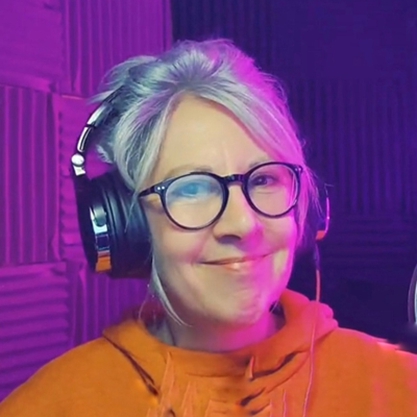
In this post, we’ll be hearing from Canadian author Carol Anne Shaw. Check out her author bio:
Carol Anne Shaw, resident of Cowichan Valley on Vancouver Island, is the author of the award-winning Hannah series, plus four young adult novels, and writing guidebook That’s Another Story: Writing with Heart.
For budding writers, the prospect of completing a full-length manuscript can feel hopelessly out of reach. Carol Anne, what advice do you have for writers who are just starting out with a book idea?
Oh, I love this question! And it makes me think of a famous quote by writer Gene Wolfe, who said, “You never learn how to write a book. You only learn how to write the book you’re writing.” So true! I thought once I had a book published, it would be easy street from that point on. Nope.
Writing every book has had its ups and downs, just like the one before it, but I’ve learned that that’s just the way it goes. The middle part is the hardest! That’s when the idea is no longer new and shiny, and it starts to feel like real work. My advice to writers just beginning would be, don’t overthink it. Don’t get hung up on editing or minute details. Just get the ideas down as they come.
If you’re stuck, write a random scene—one that will show up at some point in the novel. You can stitch everything together later on. And probably the most important thing of all? Turn off your phone, or put it in another room. Distractions will KILL your focus.
Carol Anne, share 3 ways you push through a plot snag.
Ew. Plot snags are beasts. Usually, I shut things down and go for a walk. Or, I write a random scene that I know I’ll be able to use in another part of the novel. That keeps my confidence up and the wheels in motion. The third “trick” might be opening a book by an author I admire and just familiarizing myself with how other writers weave stories. I learn so much from them.
In addition to writing, you give back to the community by speaking to groups of children. Your presentations have been described as “fascinating and inspiring.” What has been the most surprising part about giving these author talks? In what ways does this sort of public speaking differ from your previous experience as a high school visual arts teacher?
I love talking to kids about writing. Kids are fearless and not afraid to ask the most interesting questions. When I taught high school art, I was teaching teens, and while I loved working with that age group, middle-schoolers (the groups I talked to who were reading the Hannah books in their classrooms) were much more unselfconscious. I love their authenticity.
Tell us how Hannah & the Spindle Whorl came about. Did you have doubts while working on the draft? What helped propel you forward to finish the manuscript?
I first started thinking about Hannah & the Spindle Whorl about ten years before I wrote it. I used to help in my son’s classroom back when he was in elementary school, and I remember thinking that very little was taught about the First Peoples of Vancouver Island. It seemed most of the “local history” that was covered happened after colonization. Keep in mind that this was 2000—things are a lot different now. Anyway, I finally got around to writing it once my boys were through high school and was so lucky that it was picked up by Ronsdale Press—the second publisher I had submitted to!
I didn’t have any doubts while writing the story, but to be honest, it isn’t a novel I would write today. I wrote it long before Canada began engaging in the crucial discussions about First Nations culture that we are having now. Nevertheless, I approached the story with the best of intentions. Being part of an archaeological expedition in interior BC during my 20s kindled my fascination with the rich history surrounding us.
I wrote Hannah’s story in the hope that I might spark young readers’ curiosity about the island’s history and its important indigenous heritage. I hoped (and still do) that the story might serve as a portal for meaningful conversation around colonization and the darker parts of our country’s past.
Regarding my research, I spent many hours at the Cowichan Cultural Centre in Duncan, talking with First Nations people who worked there about their culture. I also read many books about colonization and BC’s history of the past 200 years.
It was never my intention to offend or exploit First Nations people, but from my perspective today, I understand the concerns surrounding stories like mine. While our intentions are often good, it is more important that we listen more than we speak. First Nations people can advocate for themselves. Looking back, I now recognize that the Hannah series may not have been mine to tell—and that even well-intentioned work can contribute to patterns of erasure or misrepresentation.
But, here we are in 2025, and if educators choose to use my Hannah books in classrooms today, I hope they do so with context—encouraging students to think critically about who gets to tell which stories, and why that matters. I’m always happy when my work becomes a springboard for deeper discussion.
However, I hope they spark conversations with kids about ALL sorts of issues! Good books, bad books, and controversial books are all valid. Knowledge is power.
Hannah & the Spindle Whorl was only the beginning. You’ve published a 3-book Hannah series! Did you have any inkling this could evolve into a full series at the time you were writing the first manuscript? Tell us how this series developed.
I had no idea that Hannah would show up three times! But every time I finished a story, another one brewed. I also thought it would be wonderful to follow her as she got older. How would she change? What would become of her friendships? Her family? Her future? And of course, her buddy, Jack the raven. Now, ten years after Hannah and the Wild Woods was published, I have a fourth story brewing. But Hannah’s ship may have sailed; we’ll see what Ronsdale Press thinks of the idea.
Besides writing, tell us about another art form you currently practice.
I love to paint and draw, but it’s something I let go of for a few years. This past year, I’ve started an illustrated journal. It’s kind of like a diary, and kind of like a sketchbook. I love combining the two things, and it feels like a form of quiet meditation. Just me, my pens and some good music on my headphones.
Carol Anne, how do you prepare yourself for a long writing session? Do you literally post a “GO AWAY – I’M WRITING” sign on your home office door?
You know, I DID have a sign that said that a while back, but now that our boys are men and living elsewhere, it’s easy to find quiet pockets in the day. My husband is a woodcarver and spends a good chunk of the day in his workshop on the property. So I’m very lucky; I have lots of time to dream and write, and the rural paradise we live in doesn’t hurt, either. I write from a little room at the back of our house that looks out into the forest that surrounds our home.
Are you a plotter or a pantster? Where do your ideas come from?
I would have to say I’m a “plantser” – a little bit of both. I always know the theme of the novel, and the “why” of why I’m writing it, and I have a pretty good idea of my main characters, but beyond that, I honestly just wing it. Usually in the middle of the novel, I am filled with doubt and swear that I’ll start outlining entire novels before I begin, but I never do! Eventually, I get there.
As for ideas? That is so hard to answer. I love stories that celebrate the ordinary. I find stories that move me are usually about ordinary people doing ordinary things. I love subtle details of everyday life, and find that if I pay attention to them, they often lead to something more. For example, I might see an elderly couple on the side of the road, picking up garbage, and ten minutes later, I have dreamed up the story of how they met fifty-one years ago, where they live, and what they have for dinner on Thursday nights.
Making a career shift takes courage. Not only have you transitioned from teaching to writing, but you’ve also begun a journey into the world of narration and voice recording. Tell us about that decision. What can we expect to see or hear from you next?
Delving into the world of audiobook narration was intimidating, but also incredibly satisfying. I love audiobooks and have over 600 titles in my Audible library. For years I fantasized about becoming a narrator, and in 2022, I decided to go for it. I was on TikTok at the time, which is home to a vast (and very supportive) narrator community. They pointed me in the right direction, I learned the audio software, took a course and some coaching, bought a microphone and an interface, and started auditioning for titles. After a year, my husband built me a fantastic vocal booth in which to record. I call it my sanctuary!
Right now, I am recording my 32nd audiobook, called The Optimized Ape: A Humorous Investigation into Our Obsession with Self-Improvement by AJ Salara. It’s funny and incredibly well researched. A real book for these crazy “influencer” times we live in.
Carol Anne, what books are you reading this season? Which Canadian authors do you recommend checking out?
Oh boy, you should see my TBR stack! It’s massive. But right now I am looking forward to reading Lisa Jewell’s Don’t Let Him In (love a good thriller!), How it Feels to Float by Helena Fox (YA), Annie Boy, by Sierra Green (another book for our times) and This is Where We Live by Janelle Brown.
As for Canadian Authors, I love Susin Nielsen’s new book—her first novel for adults—called SNAP, about a middle-aged writer who literally snaps during a school author village, and has to attend anger management classes. It’s wildly funny and relatable! I also recommend amie Chai Yun Liew’s novel Dandelion, a memoir that will pull at your heart. Lastly, I would recommend Emily Austin. Her latest novel, We Could Be Rats, is SO good.
Is there anything else you’d like to share or promote?
Well, my 8th novel is going to be out before the year is done (that’s my plan, anyway!) It’s my first full-length novel for adults, titled Secondary Feathers. Here’s the blurb:
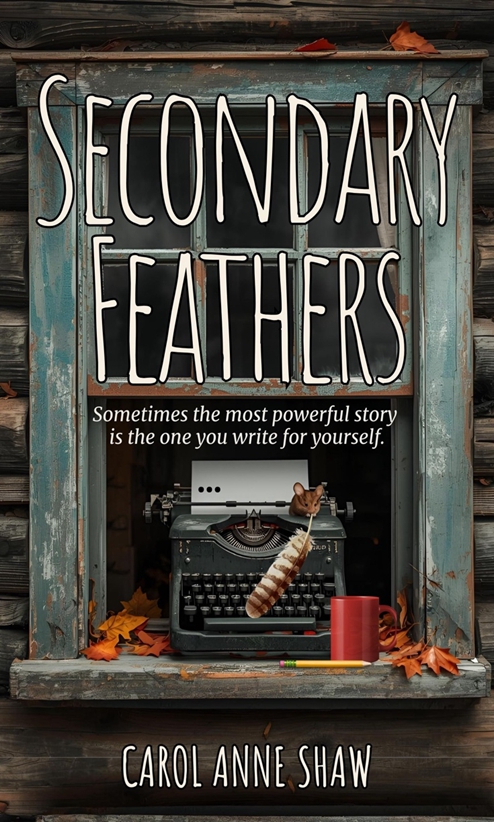
Natalie Simon is completely derailed. After her husband leaves her for a younger woman, she finds herself creatively blocked, and dangerously close to giving up on her next book—and maybe her entire life as a writer. When her literary agent suggests she “hole up” at her uncle’s abandoned hunting resort at Lynx Lake, she reluctantly agrees. It’s the perfect place to escape and find some peace… or so she thinks.
But peace and quiet come with a catch: Ben Coleman, the gruff, sarcastic caretaker who’s been living at the resort year-round. He is a fifty-five-year-old misanthrope who has exactly zero interest in playing host to a “city girl on a soul-searching sabbatical.” The feeling is mutual.
What begins as a battle over firewood and boundaries slowly turns into something more: long walks, late-night confessions, and a chemistry neither of them expected. But when the past resurfaces and hard choices must be made, Natalie is forced to ask herself not what she wants from love, but what she wants from herself.
More Carol Anne Shaw online:
Have someone in mind for an upcoming interview? Want to know more about an author or publisher? Start the conversation by commenting below. Like what you see? Remember to subscribe to have future blog posts delivered to your inbox.
Cover Image: Photo by Monica Silvestre on Pexels.com

 Pauline Shen